
Cost of Commercial EV Charging Station: 2026 Review
Cover image: AI-generated planning illustration, not a completed customer project.
Table of Contents
- What Actually Drives the Cost of a Commercial EV Charging Station
- Commercial Level 2 EV Charger Cost: What the Numbers Look Like
- Commercial DC Fast Charger Cost: The High-Power Tier
- Commercial EV Charger Electrical Upgrades: The Hidden Line Item
- Commercial EV Charger Operating Costs After the Install
- Incentives, Credits, and What They Change About Your Budget
- How to Get an Accurate Quote for Your Property
- Frequently Asked Questions
- Conclusion
Reviewed: November 1, 2026. Third-party cost examples are not EmergenServe prices or quotes.
What Actually Drives the Cost of a Commercial EV Charging Station
The cost of commercial EV charging station projects is not one number. It is four separate budgets: the charging equipment, the electrical work to support it, the site work around it, and the ongoing cost of running it. For property owners in North Charleston and the Lowcountry, separating those budgets makes vendor proposals easier to compare without assuming that the equipment price covers the whole project.
The stations themselves may be only part of the total cost. Existing electrical service, equipment output, installation conditions and parking layout can materially change the budget.
That is the core tension in every commercial charging project. A business owner compares two charger models online, picks the cheaper one, and then learns the panel cannot carry it. This guide separates the four cost buckets, explains what changes the numbers in each, and shows how to get a quote that reflects the actual property.
Key takeaway: Assess electrical capacity and the intended use before choosing equipment. This helps avoid a charging design that does not fit the property or its budget.
The Four Cost Buckets Every Business Owner Should Separate
Equipment covers the charger units themselves. Electrical infrastructure covers the panel, service capacity, conduit, and wiring that feed them. Site work covers trenching, mounting, bollards, and signage. Operating costs cover electricity, network fees, and maintenance after the switch is flipped.
Published guides may include different portions of these budgets. Ask what each proposal includes, what information it is based on, and whether the price is preliminary or covers a confirmed scope. A charger-only equipment price is not an installed project price.
Commercial Level 2 EV Charger Cost: What the Numbers Look Like
Level 2 chargers are the workhorse of commercial charging. Commercial Level 2 equipment commonly uses 208/240-volt AC supplies. Charging speed and range added depend on the circuit, charger output, vehicle and conditions. Longer parking periods at offices, hotels, retail centers and multi-family properties can make Level 2 worth evaluating; match output to actual dwell time and daily driving needs.
Published industry ranges put installed Level 2 ports in the low thousands of dollars each. Qmerit's commercial EV charging cost guide gives an indicative installed range of $3,500 to $15,000 per port, including equipment and installation. GreenLancer's commercial EV charging station guide lists Level 2 costs of $3,000 to $12,000 or more per port, while AmpUp's commercial EV charging station buyer's guide estimates total installed Level 2 costs at $3,000 to $7,000 per port. These are different vendor-published planning examples, not guaranteed prices, directly interchangeable scopes, or EmergenServe rates. A short run from suitable existing equipment and a project requiring long trenching or utility work can have very different totals.
| Cost Bucket | What It Covers | What Moves the Number |
|---|---|---|
| Equipment | Charger units, mounting hardware | Charger brand, network features, port count |
| Electrical infrastructure | Panel capacity, service size, conduit, wiring | Distance from panel, available spare capacity |
| Site work | Trenching, bollards, striping, signage | Surface type, run length, ADA compliance |
| Operating costs | Electricity, network fees, maintenance | Utility rate, usage volume, service plan |
For a business comparing the cost of commercial EV charging station options across vendors, a per-port range is a starting reference, not a substitute for an itemized written project estimate. Capacity, intended charging output, access and included work must be considered together.
Commercial DC Fast Charger Cost: The High-Power Tier
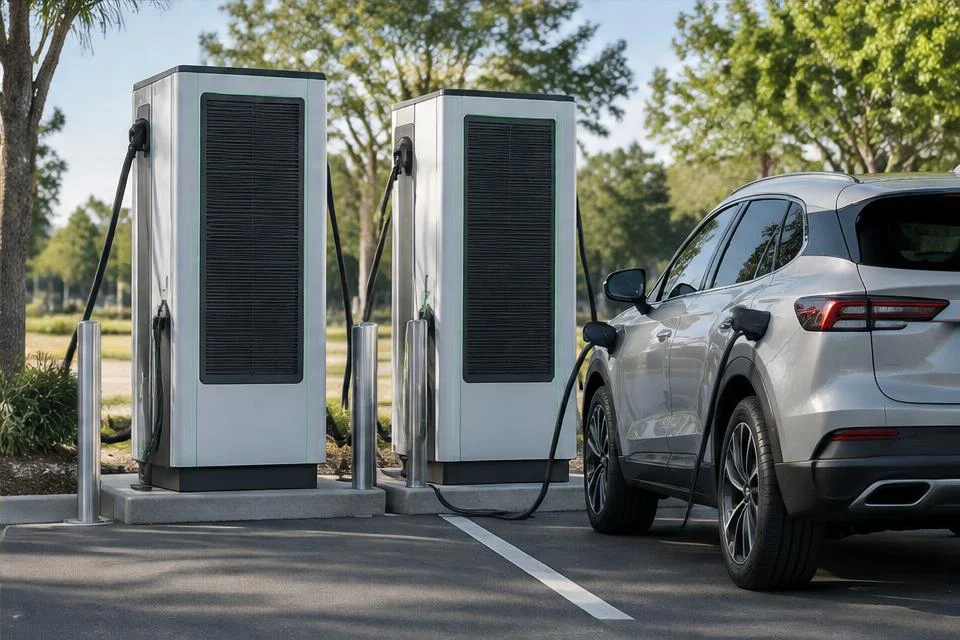
DC fast chargers are a different financial category. Output varies by station model, and electrical infrastructure must suit the selected equipment. Charging time depends on vehicle limits, station power, state of charge, battery temperature and the charging curve; there is no universal time to 80%.
GreenLancer's cost guide lists DC fast-charger costs of $80,000 to $250,000 or more. Treat that vendor-published figure as an indicative installed project range rather than an EmergenServe quote. Confirm power rating, port count and whether equipment, transformer or switchgear work, utility charges and site restoration are included; not every property needs the same upgrades.
Commercial DC fast charger cost should be weighed against expected usage, dwell time, vehicle needs and operating economics. Highway sites, fleets and high-turnover retail may have different requirements from workplace or overnight parking. Space count alone does not determine whether Level 2 or DC fast charging is the better investment.
Planning note: Utility coordination, equipment availability or infrastructure work may affect the project schedule. Confirm project-specific lead times before setting an opening date; no single timeline applies to every commercial installation.
Commercial EV Charger Electrical Upgrades: The Hidden Line Item
Electrical infrastructure can materially affect a commercial EV project budget. EV charging is a sustained load; the circuit and service design must follow applicable electrical requirements, equipment instructions and the calculated load. A panel label or a larger breaker alone does not establish available capacity. Where appropriate, an approved load-management system can allow charging without a service upgrade.
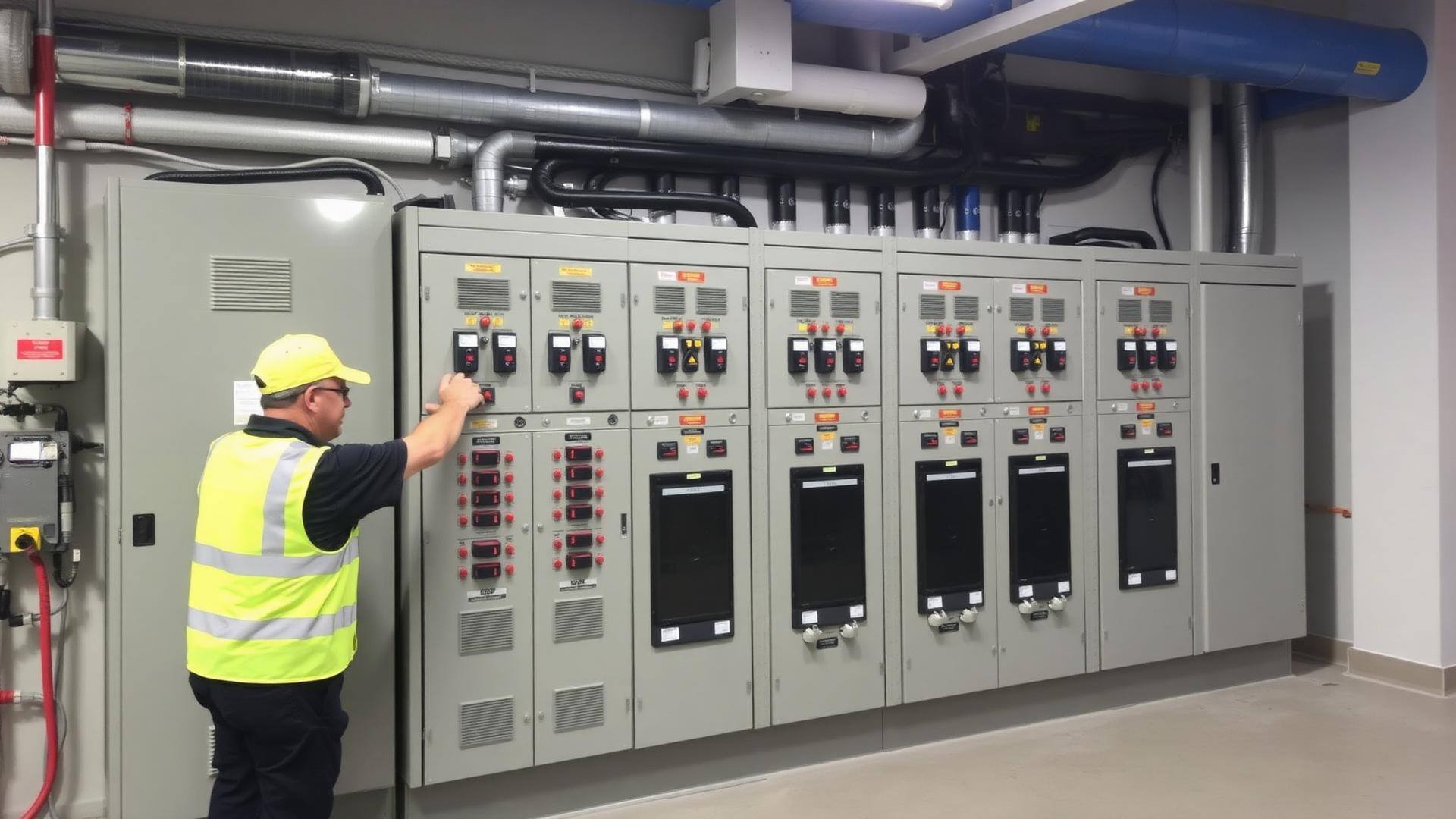
Three upgrades show up again and again:
- Panel and distribution equipment. Condition, breaker space, rating and calculated load are assessed together; age alone does not mean replacement is required.
- Service upgrade. Adding chargers can require a larger service from the utility, which means new meter equipment and utility coordination.
- Conduit and wiring runs. The distance from the panel to the parking spaces drives material and labor cost more than almost anything else.
Panel Capacity, Service Size, and Trenching
An electrician assesses existing equipment and calculated demand, available capacity, planned charging and installation conditions. If the initial design exceeds capacity, options may include a different output, approved load management, an alternate location or a service upgrade. Any upgrade decision and its schedule should follow the actual design, not a simple subtraction or an assumed requirement.
Trenching adds its own variable. A run across asphalt costs more than a run across landscaping, and a run that crosses a utility easement needs coordination before anyone digs.
Quote tip: Ask how the design accounts for calculated electrical load, charging output and future additions. Request a written scope and any assumptions or exclusions so you can distinguish a preliminary estimate from a confirmed project proposal.
Commercial EV Charger Operating Costs After the Install
Commercial EV charger operating costs continue for the life of the equipment, and they fall into three categories.
Electricity is a recurring cost. A Level 2 port running several hours a day adds measurable demand to the monthly bill, and demand charges can spike when multiple chargers run at once. Network fees apply if the chargers connect to a payment and management platform; most commercial operators want that connectivity for billing and usage data. Maintenance covers periodic inspection, cable and connector replacement, and software updates.
Owner-operated stations and charging-network partnerships can allocate equipment, operating costs and revenue differently. Do not assume a no-cost host offer is available to your property; eligibility, ownership, responsibilities and contract terms must be confirmed directly with the provider.
Incentives, Credits, and What They Change About Your Budget
Important date check: IRS Form 8911 instructions state that the federal Section 30C alternative fuel vehicle refueling property credit cannot be claimed for property placed in service after June 30, 2026. As of this November 1, 2026 review, do not include that credit in the budget for newly placed-in-service equipment. Older articles describing a general 30% credit do not establish current eligibility. Projects placed in service on or before the cutoff had additional eligibility rules; consult a qualified tax adviser about any historical claim.
State, local and utility programs may differ by property and location; no particular South Carolina rebate or dollar amount is promised here. Confirm current availability, eligibility, funding, deadlines and approved equipment directly with the administering agency or utility before relying on an incentive. An incentive you cannot claim is not a discount.
How to Get an Accurate Quote for Your Property
Start by sharing plans, charger specifications, photos of closed electrical equipment and labels, parking layout and the proposed cable route. Do not remove panel covers or expose wiring for photos. An onsite visit is not required to request an estimate, although larger or complex commercial projects may need a walkthrough before their scope can be confirmed. EmergenServe provides free written project estimates; diagnostic or troubleshooting visits are separate paid service calls. Commercial bid timing is confirmed after reviewing the details, with no fixed turnaround for every project.
Ask for these five items in writing:
- The proposed output and how the design accounts for calculated load and any load management
- A clear list of what is included and what is excluded
- The conduit and trenching route, with distances
- A timeline that accounts for utility coordination
- A separate line for permits and inspection
For a commercial electrician in North Charleston, choose a contractor who assesses equipment, electrical capacity and site requirements together. EmergenServe is family-owned and serves the Lowcountry under SCLLR Commercial Contractors license M118613. We provide an itemized written bid identifying equipment, materials, labor, permits, utility coordination and exclusions. We answer emergency calls 24/7; arrival timing depends on address, conditions, demand and crew availability, and is not guaranteed. Same-day or next-day appointments may be available; confirm the next window for your location and project.
Frequently Asked Questions
How much does a commercial EV charging station cost to install?
Published industry guides put installed Level 2 ports in the $3,000 to $15,000 range per port depending on the source, while DC fast chargers run from $80,000 to $250,000 or more. Those figures cover equipment and labor in a typical scenario, not your specific site. Panel capacity, trenching distance, and permit requirements in your area can push the number up or down. Use a project-specific written estimate rather than treating a published range as your price. Send project details and photos to start; a walkthrough may be needed for complex scope.
How much does a commercial Level 2 EV charger cost compared with a DC fast charger?
Level 2 is generally the lower-cost equipment and infrastructure category, but site conditions still matter. Qmerit reports an average of $3,500 to $15,000 per Level 2 port installed, GreenLancer lists $3,000 to $12,000 or more, and AmpUp estimates $3,000 to $7,000 per port. DC fast chargers start around $80,000 and can exceed $250,000 per unit once equipment, high-capacity electrical service, and installation are included. The gap reflects power output, transformer needs, and the electrical infrastructure each type demands.
What electrical upgrades might a commercial EV charger installation require?
Most commercial EV charger electrical upgrades come down to three things: panel or switchgear capacity, service size from the utility, and the conduit or trenching route between the power source and the charging spots. A site with spare capacity may need only a new breaker and conduit run. An older building may need a service upgrade, a transformer, or a new subpanel before a single charger goes in. An electrician can assess load calculations and confirm what your existing service supports.
Are there incentives for installing commercial EV chargers in South Carolina?
Do not assume a current rebate or a 30% federal discount. IRS instructions state that Section 30C cannot be claimed for property placed in service after June 30, 2026. Verify any state, local or utility program directly for your property, equipment and installation date; consult a qualified tax adviser about historical credit eligibility.
How much does it cost to operate and maintain commercial EV chargers?
Commercial EV charger operating costs depend on electricity rates, how often the stations are used, and whether you set driver fees to offset the load. Maintenance may include periodic inspections, software updates, cable and connector checks, and repairs. Actual costs depend on equipment, usage, exposure and the service agreement. Networked chargers add a subscription or transaction fee. Many businesses treat charging as a customer amenity rather than a profit center, which changes how you weigh the ongoing cost against the traffic it brings.
Conclusion
The real challenge with commercial charging is not picking a charger. It is knowing whether the property can carry it, and what it takes to make the answer yes. EmergenServe can help assess the charging design, load management, panel or service work and installation scope, with any required utility coordination identified in the written proposal. Explore our EV charger installation service, installation guide, and North Charleston EV charging page, or call (843) 754-1671 to discuss your property.
