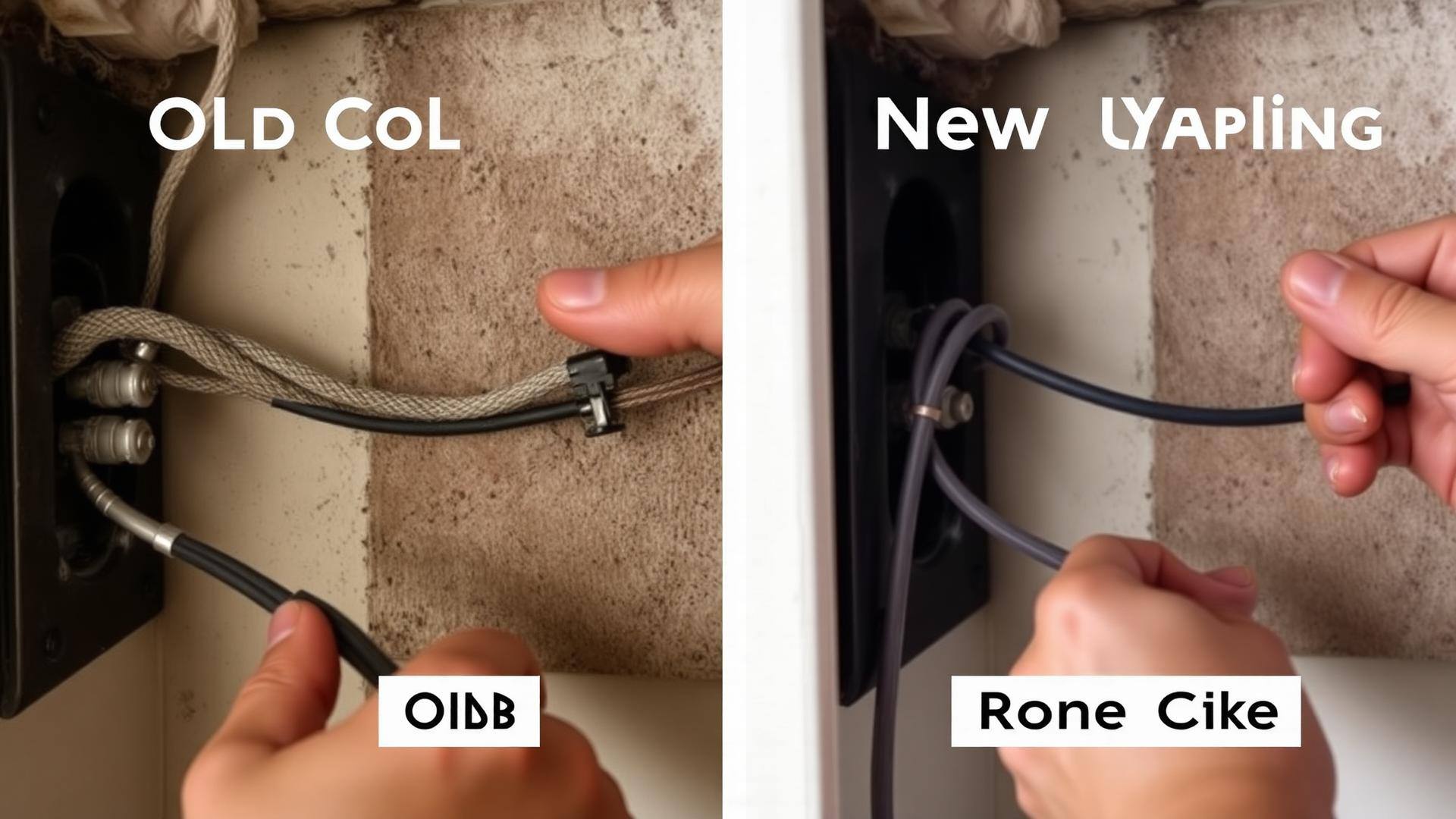
Old wiring isn't just outdated. It's a ticking clock. EmergenServe replaces knob-and-tube, aluminum, and cloth-covered wiring with modern copper systems designed for how you live today.
Many homes across the Lowcountry, especially those built in the 1940s through 1970s, are still running on their original wiring. The insulation cracks, connections loosen, and the cable itself was never rated for the electrical load a modern household demands. Hair dryers, air conditioning, home offices, and EV chargers. None of that existed when your home's wiring was designed.
A complete rewire isn't as invasive as most people fear. We use fishing techniques, attic and crawl space access, and strategic small openings to pull new copper Romex without gutting your walls. Where we do open up, we coordinate patching so you're not left with a construction zone. The finished product is a modern, grounded, AFCI/GFCI-protected electrical system that can handle anything you throw at it.
We also handle the paperwork: pulling permits with Charleston County, scheduling the inspection, and providing written documentation your insurance company may require. Several Lowcountry insurers have started requiring rewiring for coverage renewal on pre-1970 homes. If that's your situation, we can walk you through the process.
Complete home rewiring in Charleston is particularly important because of the region's unique combination of aging housing stock and challenging coastal conditions. Many pre-1970s homes in the Lowcountry still contain knob-and-tube wiring, cloth-insulated cable, or aluminum branch circuits that deteriorate faster in Charleston's high-humidity environment. The salt air accelerates corrosion at junction points, and seasonal temperature swings cause connections to expand and contract until they loosen. Our licensed Charleston electricians specialize in navigating the architectural challenges of rewiring older homes without disturbing historic trim, plaster walls, or hardwood floors that make these properties so valuable. We install modern copper Romex wiring with AFCI and GFCI protection throughout, bringing your entire electrical system up to current NEC code standards. Every whole-house rewiring project includes a new electrical panel, properly grounded outlets in every room, and updated smoke detector circuits, giving you a safe, modern electrical system that protects your family and satisfies your insurance requirements.
Whole-home rewiring is one of the most disruptive, and most rewarding, investments a Charleston homeowner can make. The Lowcountry's housing stock spans more than 300 years, from antebellum Charleston singles south of Broad to mid-century ranches in West Ashley to 1970s tract homes in Summerville and Goose Creek. Many still run on original cloth-insulated, knob-and-tube, or aluminum branch wiring that simply cannot support modern electrical loads. EmergenServe specializes in complete rewiring projects across Charleston, Mount Pleasant, James Island, Johns Island, Daniel Island, North Charleston, West Ashley, Summerville, Goose Creek, Hanahan, Moncks Corner, Isle of Palms, and Sullivan's Island.
Knob-and-tube (K&T) wiring was the standard installation method in Charleston homes built before approximately 1945. While intact K&T can technically remain energized, it has no ground conductor, becomes brittle with age, and is incompatible with modern insulation, covering K&T with attic insulation creates a serious fire hazard. Most South Carolina insurance carriers refuse to write or renew policies on homes with active K&T circuits.
Cloth-insulated wiring from the 1940s through 1960s suffers from similar problems. The rubber insulation hardens, cracks, and falls away from the conductors, leaving bare copper exposed in walls. Aluminum branch circuit wiring installed during the 1965-1973 copper shortage expands and contracts at a different rate than copper terminations, loosening connections over time and creating a documented fire risk.
EmergenServe identifies all three of these legacy wiring systems during our pre-rewire assessment and provides a phased remediation plan that fits your budget and renovation timeline.
Phased Rewiring Vs Whole-Home Rewiring
Not every Charleston rewire requires gutting the entire house at once. EmergenServe offers phased rewiring plans where we replace the highest-risk circuits first, kitchen, bathrooms, laundry, and any K&T or aluminum runs, while leaving lower-risk circuits in place until your budget or renovation schedule allows full replacement. This approach is especially common in occupied historic Charleston singles where displacement is impractical.
Whole-home rewiring during a major renovation, on the other hand, is the most efficient and cost-effective approach. With walls already open, we can pull new copper home runs to every outlet, switch, and fixture; install dedicated circuits for kitchens, bathrooms, and laundry rooms per current NEC code; add AFCI and GFCI protection where required; and pre-wire for low-voltage data, AV, and smart-home systems.
Knob-and-tube (K&T) wiring removal
Cloth-insulated wiring replacement
Aluminum branch circuit remediation
Copper home runs to every device
AFCI and GFCI code-compliant protection
Dedicated kitchen, bath, and laundry circuits
Smart home and low-voltage pre-wire
Old-work, retrofit, and minimal-drywall techniques
Historic Charleston Homes & Plaster Wall Techniques
Charleston's historic single houses, Italianate row houses, and antebellum townhomes present unique rewiring challenges. Lath-and-plaster walls, mortise framing, and hand-hewn structural members make standard rewiring techniques destructive and expensive if attempted by an unfamiliar crew. EmergenServe has decades of experience working in historic Charleston structures and uses proven old-work techniques, fishing wire through chase walls, pulling through baseboards and crown molding, drilling diagonally between studs, and selectively patching plaster, to minimize wall damage.
We coordinate directly with Charleston's Board of Architectural Review (BAR) when working on historic district properties, and partner with respected local plaster restoration contractors for any repair work that exceeds simple drywall patching.
Permits, Inspections & Living Through A Rewire
Every whole-home or partial rewire in Charleston requires a permit and a final inspection. EmergenServe handles all permitting with the City of Charleston, Charleston County, Berkeley County, or Dorchester County, schedules every required rough-in and final inspection, and provides a complete updated panel directory at project completion.
We work with most homeowners to keep at least partial power available throughout the project, typically isolating one circuit at a time so refrigerators, freezers, and one HVAC system stay running. Most whole-home rewires take 7 to 14 working days depending on home size, accessibility, and finish complexity.
Old-Work Tricks We Use In Charleston Singles
Rewiring a 200-year-old Charleston single house south of Broad is nothing like rewiring a tract home in Park Circle. The walls are lath-and-plaster over heart pine studs, the chases run in places that don't match the floor plan, and the BAR cares deeply about every visible penetration. We fish 12-2 NM-B through the original gas-pipe chases when we can find them, drill diagonal bores between studs with a 90-degree right-angle drill kit, and pull through baseboard and crown molding so the only visible patching is at the device boxes themselves.
We carry old-work boxes in steel and plastic, low-voltage mud rings, and a borescope for confirming a clear path before we ever cut plaster. For double-piazza houses, we run home runs vertically inside the piazza wall and break out horizontally on each floor, saving the interior plaster entirely. When we do have to open plaster, we score with a multi-tool instead of a utility knife, save the keyway intact, and hand the wall off to a plaster restoration partner who can blend a hand-troweled patch into 1840s lime plaster. That's the level of care a historic Charleston rewire actually requires.
Frequently Asked Questions
How much does whole-home rewiring cost in Charleston?
Complete rewiring of a typical 1,800 to 2,400 sq ft Charleston home runs $14,000 to $28,000 depending on accessibility, panel upgrades, and historic-home plaster work. Phased rewires can be tackled $3,500 to $7,500 at a time.
Can you rewire while we live in the home?
Yes. Most EmergenServe rewires keep refrigerators, one HVAC system, and at least one bathroom on power throughout the project. Total power-down windows are typically four to six hours per day.
Will you damage our walls?
Some wall opening is unavoidable, but our old-work techniques minimize it dramatically. We typically open walls only at switch and outlet boxes, fish wire through chases, and selectively patch. Historic plaster work is coordinated with specialty restoration partners.
How long does a whole-home rewire take?
Most Charleston rewires take 7 to 14 working days. Larger historic homes with extensive plaster work may take three to four weeks.
Do I need to rewire if I have aluminum branch circuits?
Aluminum branch wiring is a documented fire risk. If a full rewire is not feasible, EmergenServe can install AlumiConn copper pigtails at every device, an insurance-approved alternative that dramatically reduces the risk of failed terminations.
Service Areas & Specialties
Charleston whole house rewiring · knob and tube removal Charleston · cloth wiring replacement SC · aluminum wiring repair Charleston · historic home rewire Mount Pleasant · Charleston single house electrical · AlumiConn pigtail installer · Daniel Island home rewire · James Island whole home rewiring · phased rewiring Charleston · old work wiring techniques · Charleston BAR electrical compliance
Related Electrical Services
Explore the other services our Charleston electricians deliver across the Lowcountry.
SC Commercial Contractor License #M118613. Active general liability and workers' comp coverage. COI sent to your GC, HOA, or closing attorney the same day you ask.
5.0-Star Google Rated
Google Screened and BBB Accredited with 33 real Google reviews from Charleston, Mount Pleasant, Summerville, and across the Lowcountry.
Upfront Flat-Rate Pricing
Every job is priced before we lift a tool. No clock running, no surprise add-ons, no guessing what the bill will look like when we're done.
100% Satisfaction Guarantee
If something isn't right, we come back and fix it. Workmanship stands behind every breaker, outlet, fixture, and panel we install.
Whole-home rewiring pulls out the legacy branch circuits, knob-and-tube, cloth-jacketed NM, or early aluminum, and replaces them with modern copper NM-B, AFCI and GFCI protection, and grounded receptacles throughout.
We work in occupied Charleston homes with minimal drywall damage using attic and crawl access, fish tape, and small-notch repair.
Signs You Need It Now
Two-prong ungrounded outlets in every room
Cloth-jacketed wiring visible in the attic or crawl space
Aluminum branch wiring installed in the 1960s or 1970s
Frequent breaker trips or warm receptacles
Insurance carrier requiring a wiring report before renewal
Renovating an older peninsula or downtown Charleston home
Our Process
01Whole-house walkthrough with load calc and circuit-by-circuit plan
02Phased rewire by room so you keep power and hot water each night
03Small access holes at top and bottom plates, we patch with drywall-ready backing
04AFCI and GFCI protection where the current code requires it
05Final inspection, panel labeling, and a written wiring report for insurance
Project Considerations for the Lowcountry
·Downtown historic plaster walls need a specialty crew, we have one
·Aluminum branch circuits can often be pigtailed with COPALUM instead of full rewire
·Insulation removal and reinstallation is a real cost driver, we quote it up front
·Whole-home surge and a grounding electrode inspection are part of every rewire
Whole-Home Rewiring FAQs
How long does rewiring take?
A typical 1,800 sq ft Charleston home is five to eight working days phased by room.
Do we have to move out?
No, we keep one wing energized at a time so you keep bedrooms, kitchen, and hot water.
How much drywall damage should we expect?
Small palm-sized access holes at top and bottom plates. We leave them backed and ready for a painter.
Equipment & planning guide · the Charleston Lowcountry
Planning circuits, rewiring, and electrical alterations
Use this guide to compare options before booking. For this work, the important starting points are the condition of existing conductors, the planned loads, and access through finished walls and ceilings. Exact equipment selection follows an assessment of your property, the manufacturer’s instructions, and applicable local requirements.
01
A new circuit is different from extending an old one
Extending a circuit can be appropriate when its capacity, grounding, conductor condition, and protection suit the new use. A dedicated circuit creates a separate supply for equipment or a defined area and may be the better choice for larger loads. The electrician checks the existing installation before deciding whether either approach is suitable. Adding devices to a damaged or overloaded circuit only spreads the underlying problem.
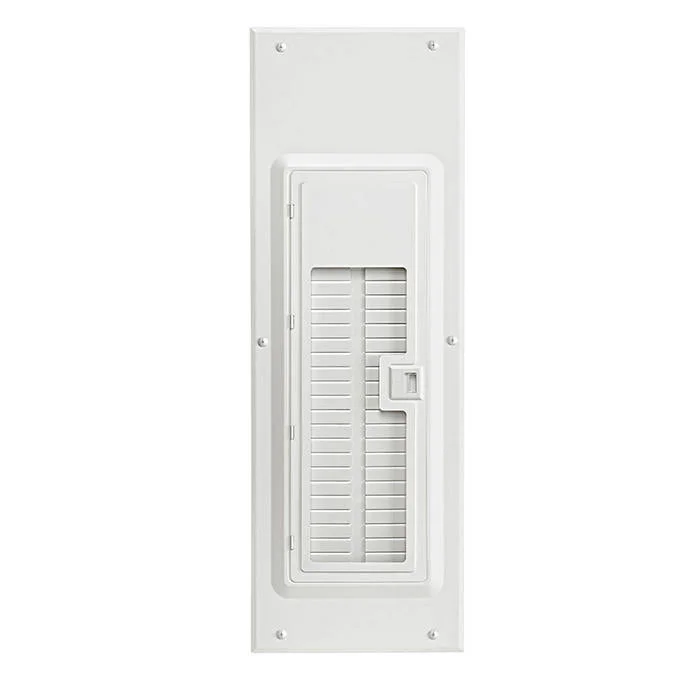
Circuit design includes conductor type and size, routing, physical protection, box capacity, and the equipment’s connection requirements. Long runs or demanding loads may call for additional design attention. The pictured Leviton load center shows the distribution equipment where branch circuits originate; it does not establish that a panel replacement is needed for every wiring job. Ask which parts of the existing system can safely remain and why new work is being separated from older wiring.
Manufacturer product photographs illustrate the equipment discussed, not completed EmergenServe installations. Models are examples; availability, specifications, and compatibility must be confirmed. Source attribution does not imply a manufacturer partnership.
Lowcountry conditions that affect the work
Humidity, outdoor moisture, retained finishes, and concealed wiring can all affect the scope of an electrical project in the Lowcountry. Coastal exposure calls for equipment suited to the actual mounting location, not a generic claim that every enclosure is weatherproof. In older buildings, assess the conductors and prior alterations rather than judging by faceplates. Newer construction still needs a load calculation when substantial equipment is added.
For this project, assess the condition of existing conductors, the planned loads, and access through finished walls and ceilings at the actual address. Confirm the parcel’s jurisdiction before scheduling work that requires a permit. Inspection or utility scheduling can affect completion; ask about the sequence rather than treating an estimated date as a guaranteed reconnection time.
Prepare for a useful estimate
List renovation areas and the equipment planned for each room.
Share known inspection findings or prior wiring alterations.
Discuss finish repairs and access before work begins.
Pricing depends on the agreed equipment, routing, access, existing conditions, and any required permits or utility work. Existing starting prices elsewhere on this page are not a quote for every configuration. Compare written scopes and confirm finish repairs, supplied materials, testing, and exclusions. No new price or manufacturer warranty is implied by the product examples in this guide.