EmergenServe, LLC BBB Business Review
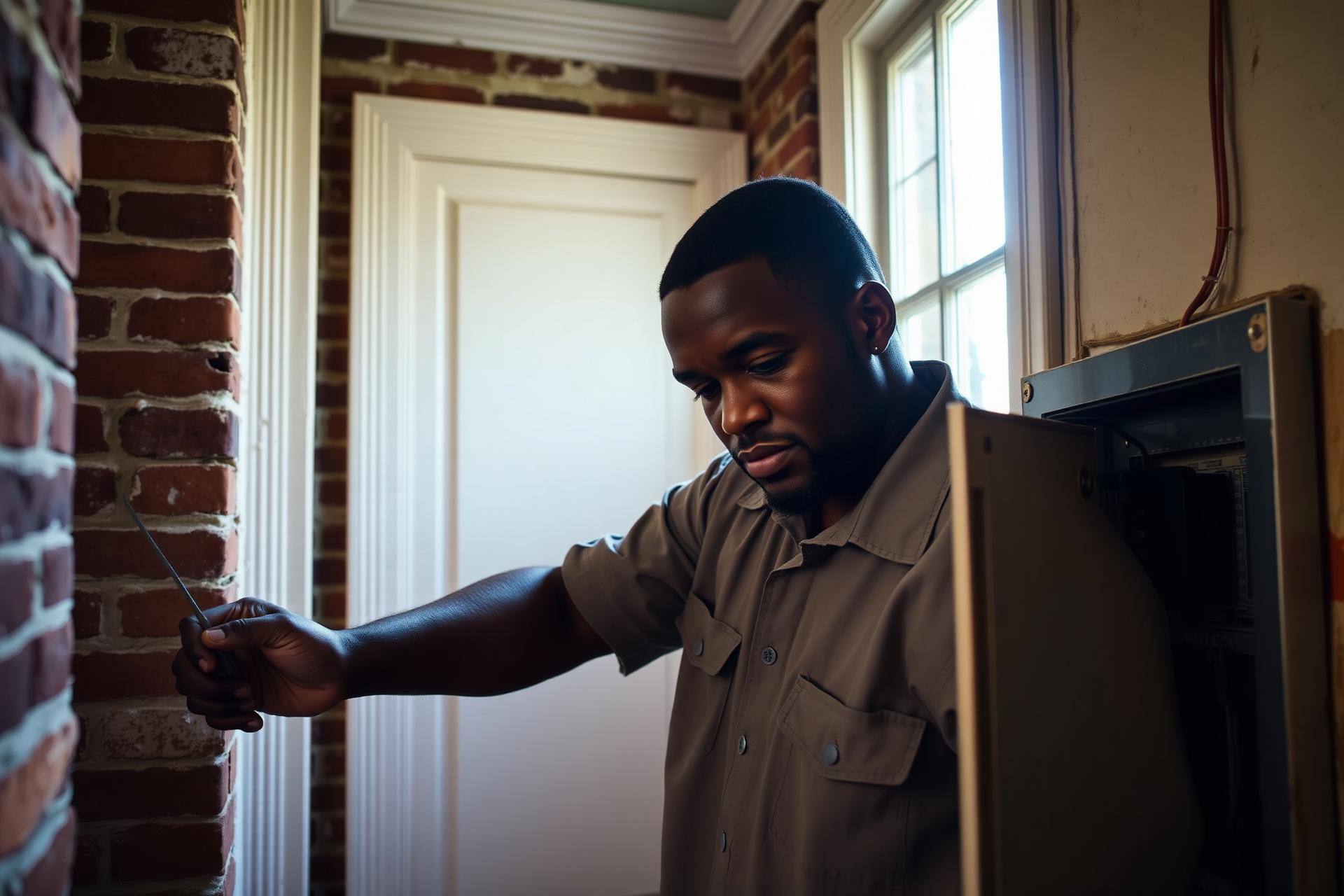
    Licensed Charleston electrician replacing knob and tube wiring in a historic Charleston single house with plaster walls and original millwork
    Back to Residential Services

    Historic Home Electrical Charleston SC

    Specialty electrical work for downtown single houses, Ansonborough row houses, Mount Pleasant Old Village cottages, and Summerville craftsmans. Knob-and-tube replacement, aluminum branch remediation, and plaster-friendly rewires by licensed Charleston electricians.

    Charleston Electricians Who Speak Plaster, Brick, and BAR

    A 1790 single house south of Broad does not get wired like a Daniel Island new build. Plaster on lath, balloon framing, heart pine floors, hand-blown windows, and original fire blocks all change how we route wire, where we cut access, and how we restore the surface when we are done. Our crews have worked in Charleston historic homes for years and treat the house as carefully as the electrical system.

    On every historic-home project we start with a full assessment: panel age and condition, what is feeding the house from the meter, what type of branch wiring is in the walls (knob-and-tube, cloth, early Romex, aluminum), and where the grounding system actually terminates. We hand you a written report with photos, an itemized scope, and a fixed price before any wall is opened.

    Most historic-home jobs combine three things: a service upgrade to a modern 200A panel, replacement of the unsafe branch wiring, and a careful preservation of the trim, plaster, and fixtures that make the home what it is. We stage work room by room, restore power at the end of every day, and coordinate plaster patching and paint touch-up with trades we work with regularly.

    We work on historic homes throughout Charleston Old and Historic District, Harleston Village, Ansonborough, Wraggborough, Cannonborough-Elliotborough, Mount Pleasant Old Village, North Central Charleston, Summerville Historic District, and the Sullivan's Island and Isle of Palms cottage districts. Every project is permitted, inspected, and backed by a written workmanship warranty.

    Our Historic Home Electrical Services:

    • Knob-and-tube assessment, mapping, and full replacement
    • Cloth-jacket and early Romex branch wiring replacement
    • Aluminum branch wiring remediation with COPALUM or AlumiConn
    • Federal Pacific, Zinsco, and fused panel replacement to 200A service
    • Plaster-friendly fishing of new copper circuits through balloon-framed walls
    • Period-appropriate switch, sconce, and pendant wiring in historic homes
    • GFCI and AFCI protection added to two-prong and ungrounded circuits
    • Insurance-ready documentation for South of Broad and Ansonborough carriers
    • Board of Architectural Review (BAR) and Historic District coordination
    • Charleston AHJ permitting, inspection, and certificate of completion

    Specialty Work We Do in Historic Charleston Homes

    Older homes have older risks. These are the issues we are called in to solve most often.

    Knob-and-Tube Replacement

    Full replacement of original knob-and-tube branch wiring with modern copper Romex. Includes panel upgrade, GFCI/AFCI coverage, and insurance documentation packet.

    Aluminum Branch Remediation

    1960s and 1970s aluminum branch wiring remediated with COPALUM or AlumiConn pigtail terminations at every device, or replaced entirely when scope warrants.

    Federal Pacific & Fused Panels

    Replacement of Federal Pacific Stab-Lok, Zinsco, and original fused service panels with modern 200A copper bus panels and whole-home surge protection.

    Period Lighting & Devices

    Wiring for restored sconces, chandeliers, push-button switches, and unlacquered brass plates that respect the era of the home.

    Plaster-Friendly Rewires

    Strategic fishing through stud bays, attic, and crawl runs to minimize plaster cuts. Every opening photographed and located on a circuit map for patching.

    BAR & Historic District Coordination

    Exterior fixtures, meter relocations, and service entrance changes coordinated with the Charleston Board of Architectural Review and AHJ.

    Own a Historic Charleston Home? Start With an Assessment.

    We will walk the property, map the existing system, and put a fixed quote and prioritized scope in your inbox the same week.

    Historic homes are the soul of Charleston, and they deserve electrical work that respects both the structure and the people living in it. EmergenServe's licensed electricians specialize in knob-and-tube replacement, aluminum branch remediation, fused and Federal Pacific panel replacement, and plaster-friendly rewires throughout the Old and Historic District, Mount Pleasant Old Village, Summerville Historic District, and the Lowcountry's older neighborhoods. Every project is permitted, inspected, BAR-coordinated where required, and warrantied in writing.

    Why Historic Charleston Wiring Needs a Specialist

    Most pre-1950 Charleston homes were originally wired with knob-and-tube: open copper conductors run on porcelain insulators through joists and studs. The system was safe in 1925 when there was a single light bulb and a radio per room. It is not safe under modern loads, it is not compatible with insulation packed around it, and most South Carolina insurance carriers now require it to be remediated or replaced. A specialist understands where it hides, how to map it, and how to replace it without destroying the house.

    Homes built between 1965 and 1975 commonly used solid aluminum branch wiring. Aluminum expands and contracts differently than the copper terminals at outlets and switches, which loosens connections over time and creates a real fire risk at every device. We remediate aluminum either by replacing the branch wiring outright or by installing approved COPALUM crimp or AlumiConn pigtail terminations at every device in the home.

    How We Protect Plaster, Trim, and Original Fixtures

    Cutting plaster the wrong way creates cracks that telegraph through the wall years later. We score before we cut, vacuum continuously, and keep openings as small as the work allows. Wherever possible we run new copper through attic, crawl, and existing chases to avoid wall cuts entirely. When we do cut, we document the location on a circuit map and coordinate plaster patching with finishers who have worked on historic Charleston homes for decades.

    Original push-button switches, ceiling roses, and unlacquered brass cover plates can usually be reused or restored. We rewire to modern devices behind the historic faceplates where the original mechanism is no longer serviceable, and we source period-correct replacements when the originals are beyond repair.

    • Score-and-vacuum plaster cuts to prevent telegraphing cracks
    • Attic, crawl, and chase routing to minimize wall openings
    • Photo log and circuit map for every opening made
    • Restoration of original push-button and toggle switch faces
    • Period-correct sconce, chandelier, and pendant wiring
    • Coordinated plaster and paint touch-up with finish trades

    Insurance, BAR, and the Charleston AHJ

    Historic-home electrical work in Charleston frequently involves three outside stakeholders: your insurance carrier (who needs proof that knob-and-tube and aluminum issues are remediated), the Board of Architectural Review (who must approve any exterior fixture, meter, or service change in the Old and Historic District), and the City of Charleston permitting and inspection office. We handle all three. Insurance gets a written documentation packet with photos and panel labels, BAR gets the submittal package with fixture cut sheets and routing diagrams, and the AHJ gets the permit and inspection coordination from start to certificate of completion.

    On waterfront and Sullivan's Island historic cottages, we add NEC Article 680 compliance for any dock, lift, or pool circuits, and we use marine-grade fittings and stainless hardware on every exterior device exposed to salt air.

    Frequently Asked Questions

    Can I live in my home during a historic rewire?

    In almost every case, yes. We work room by room, restore power every evening, and stage drywall and plaster openings so bedrooms and bathrooms stay usable. We tell you upfront if any part of the scope requires the home to be vacated.

    How long does a historic Charleston home rewire take?

    Most 2,000 to 3,500 square foot historic homes take 5 to 10 working days for the electrical scope, plus 2 to 4 additional days for plaster patching and paint touch-up coordinated by our finish trades.

    Will a rewire lower my insurance premium?

    Often, yes. Many Lowcountry carriers either require knob-and-tube and ungrounded aluminum remediation as a condition of coverage, or they offer reduced premiums once the work is documented. We supply the photo and panel-label packet your carrier needs.

    Service Areas & Specialties

    historic home electrical Charleston · knob and tube replacement Charleston SC · aluminum wiring remediation Charleston · Federal Pacific panel replacement Charleston · BAR electrician Charleston · Old and Historic District electrician · Ansonborough rewire · Mount Pleasant Old Village electrician · Summerville historic district electrician · Sullivan's Island cottage rewire

    Why Charleston Trusts EmergenServe

    • Licensed, Bonded & Insured

      SC Commercial Contractor License #M118613. Active general liability and workers' comp coverage. COI sent to your GC, HOA, or closing attorney the same day you ask.

    • 5.0-Star Google Rated

      Google Screened and BBB Accredited with 33 real Google reviews from Charleston, Mount Pleasant, Summerville, and across the Lowcountry.

    • Upfront Flat-Rate Pricing

      Every job is priced before we lift a tool. No clock running, no surprise add-ons, no guessing what the bill will look like when we're done.

    • 100% Satisfaction Guarantee

      If something isn't right, we come back and fix it. Workmanship stands behind every breaker, outlet, fixture, and panel we install.

    EmergenServe, LLC BBB Business Review

    Equipment & planning guide · the Charleston Lowcountry

    Planning circuits, rewiring, and electrical alterations

    Use this guide to compare options before booking. For this work, the important starting points are the condition of existing conductors, the planned loads, and access through finished walls and ceilings. Exact equipment selection follows an assessment of your property, the manufacturer’s instructions, and applicable local requirements.

    01

    A new circuit is different from extending an old one

    Extending a circuit can be appropriate when its capacity, grounding, conductor condition, and protection suit the new use. A dedicated circuit creates a separate supply for equipment or a defined area and may be the better choice for larger loads. The electrician checks the existing installation before deciding whether either approach is suitable. Adding devices to a damaged or overloaded circuit only spreads the underlying problem.

    Circuit design includes conductor type and size, routing, physical protection, box capacity, and the equipment’s connection requirements. Long runs or demanding loads may call for additional design attention. The pictured Leviton load center shows the distribution equipment where branch circuits originate; it does not establish that a panel replacement is needed for every wiring job. Ask which parts of the existing system can safely remain and why new work is being separated from older wiring.
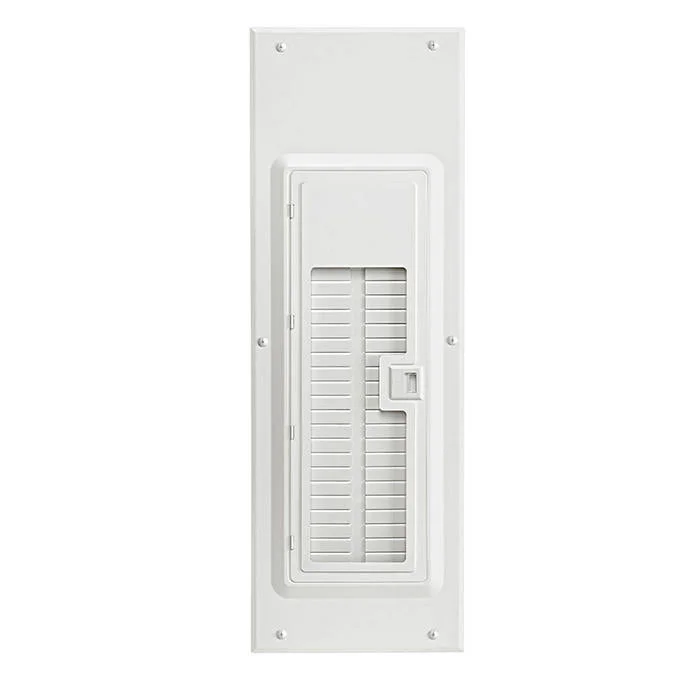
    42 Space Indoor Load Center and Door with Window, LDC42-W manufacturer product photo, A new circuit is different from extending an old one guide for the Charleston Lowcountry
    42 Space Indoor Load Center and Door with Window, LDC42-WProduct source: Leviton
    02

    Whole-home rewiring versus targeted repairs

    A whole-home rewire is a coordinated project, not a collection of faceplate replacements. It can address deteriorated insulation, missing grounding conductors, insufficient circuits, or extensive alterations that are difficult to verify. Targeted repairs may be appropriate when a clearly defined part of an otherwise sound installation is defective. The distinction requires inspection and testing, not a judgment based solely on the year a house was built.

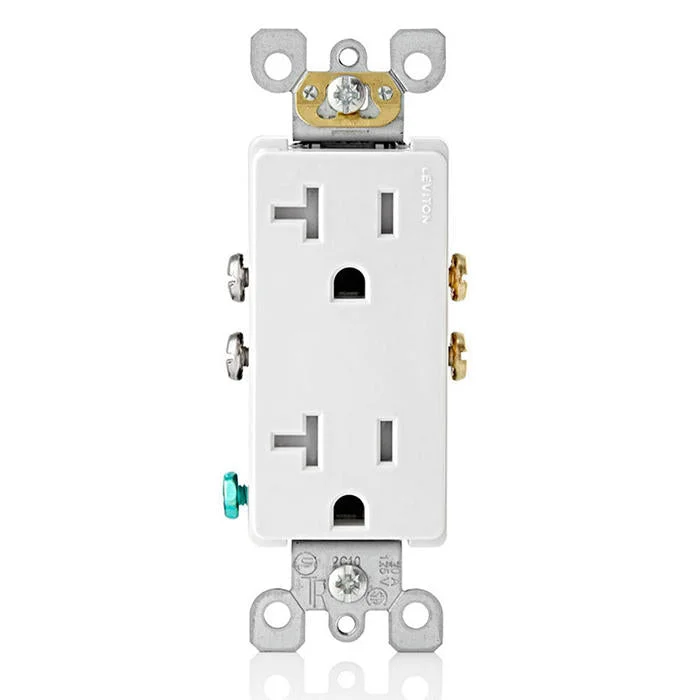
    Older two-wire circuits require careful handling when devices are replaced. GFCI protection can be an allowed part of certain replacement arrangements, with the required identification, but it does not add an equipment grounding conductor. Discuss whether the objective is a limited correction, increased capacity, or a complete modernization. Those goals lead to different scopes, costs, access needs, and documentation. The pictured receptacle is a device example, not evidence that concealed wiring has been upgraded.

    20 Amp Decora Tamper-Resistant Duplex Outlet/Receptacle, Grounding, T5825-W manufacturer product photo, Whole-home rewiring versus targeted repairs guide for the Charleston Lowcountry
    20 Amp Decora Tamper-Resistant Duplex Outlet/Receptacle, Grounding, T5825-WProduct source: Leviton

    Manufacturer product photographs illustrate the equipment discussed, not completed EmergenServe installations. Models are examples; availability, specifications, and compatibility must be confirmed. Source attribution does not imply a manufacturer partnership.

    Lowcountry conditions that affect the work

    Humidity, outdoor moisture, retained finishes, and concealed wiring can all affect the scope of an electrical project in the Lowcountry. Coastal exposure calls for equipment suited to the actual mounting location, not a generic claim that every enclosure is weatherproof. In older buildings, assess the conductors and prior alterations rather than judging by faceplates. Newer construction still needs a load calculation when substantial equipment is added.

    For this project, assess the condition of existing conductors, the planned loads, and access through finished walls and ceilings at the actual address. Confirm the parcel’s jurisdiction before scheduling work that requires a permit. Inspection or utility scheduling can affect completion; ask about the sequence rather than treating an estimated date as a guaranteed reconnection time.

    Prepare for a useful estimate

    • List renovation areas and the equipment planned for each room.
    • Share known inspection findings or prior wiring alterations.
    • Discuss finish repairs and access before work begins.

    Pricing depends on the agreed equipment, routing, access, existing conditions, and any required permits or utility work. Existing starting prices elsewhere on this page are not a quote for every configuration. Compare written scopes and confirm finish repairs, supplied materials, testing, and exclusions. No new price or manufacturer warranty is implied by the product examples in this guide.