EmergenServe, LLC BBB Business Review
    Licensed Charleston electrician wiring a pool equipment pad with GFCI-protected sub-panel and bonding grid
    Back to Residential Services

    Pool & Hot Tub Wiring Charleston SC

    NEC Article 680 pool, spa, and hot tub electrical wiring. GFCI disconnects, equipotential bonding, pump and heater hookups, and corrosion-rated hardware built for the Lowcountry salt air.

    Aquatic Wiring, Done to Article 680

    Water and electricity are the least forgiving pair in the whole NEC, and the code section that governs them (Article 680) is one of the most detailed in the book. Our licensed Charleston electricians wire pools, spas, hot tubs, and fountains to every clause of it: GFCI-protected disconnects within sight, equipotential bonding grids, dedicated feeders, weather-rated enclosures, and pump, heater, and salt-cell hookups sized for the equipment on the pad.

    Charleston humidity, driving rain, and salt spray on the barrier islands destroy anything but the right hardware. We install PVC-coated conduit, corrosion-rated boxes, stainless screws, and marine-grade disconnects on every waterfront job in Isle of Palms, Sullivan's Island, Folly, Kiawah, Seabrook, and Daniel Island so your pool electrical still passes an inspection ten years from now.

    For hot tubs and spas we install a dedicated 50A or 60A GFCI spa panel within reach of the tub, land the manufacturer's whip, and terminate the equipotential bond to the tub's bonding lug. For inground pools we run a sub-panel to the equipment pad, land dedicated GFCI circuits for pump, heater, salt cell, and lights, and tie the bonding grid to rebar, ladder anchors, deck steel, and every piece of metal within five feet of the water.

    We wire pools and hot tubs across Charleston, Mount Pleasant, Daniel Island, James Island, Johns Island, North Charleston, West Ashley, Summerville, Goose Creek, Hanahan, Moncks Corner, Isle of Palms, Sullivan's Island, and Kiawah. Every job is permitted, inspected, and warrantied in writing.

    Our Pool & Spa Electrical Services:

    • Pool pump, heater, and salt-cell equipment hookups
    • Hot tub and spa 240V/50A GFCI disconnect installation
    • Equipotential bonding grids per NEC Article 680
    • Underwater pool light wiring and low-voltage transformers
    • GFCI breakers and receptacles within reach of pool decks
    • Dock, boat lift, and shore-power wiring for Lowcountry waterfront
    • Pool and spa panel sub-feed and disconnect installation
    • Corrosion-rated conduit, boxes, and stainless hardware
    • Existing pool electrical inspection and code-compliance corrections
    • Permit, inspection, and AHJ coordination

    Why Pool & Spa Wiring Is Its Own Trade

    NEC Article 680 Compliance

    Every disconnect, bond, and clearance is built to the current pool and spa code so your job passes inspection the first time.

    GFCI Protection at the Panel

    Pump, heater, salt cell, lights, and receptacles all land on dedicated GFCI breakers so a single fault cannot energize the water.

    Coastal-Grade Hardware

    PVC-coated conduit, stainless screws, and marine-rated enclosures survive Lowcountry salt air, sun, and wind-driven rain.

    Installing a New Pool or Hot Tub?

    We size the feeder, install the spa panel or pool sub-panel, wire the equipment pad, and stand on the inspection. Coordinated with your pool builder or spa dealer end-to-end.

    Pool and hot tub electrical work is one of the most heavily regulated corners of the residential trade, and one of the most common failure points on Charleston home inspections. EmergenServe's licensed electricians wire new pools, hot tubs, and swim spas, retrofit older pools that were never bonded correctly, and troubleshoot pool circuits that keep tripping. Every job follows NEC Article 680, gets a permit, and stands on the inspection.

    Equipotential Bonding: The Grid Under Every Charleston Pool

    Equipotential bonding is what keeps a fault from creating a voltage difference across the pool water. NEC 680.26 requires a #8 solid copper conductor tying together the pool shell rebar or structural steel, every metal ladder anchor, the pump and heater housings, the underwater light niches, any perimeter deck reinforcement within three feet of the water, and any metal within five feet of the inside pool wall.

    On new pool builds we install the grid before the deck is poured and terminate it to a bonding lug at the equipment pad. On older Charleston pools that were built before 2008 we retrofit the grid where possible, drive a supplemental grid conductor around the perimeter, and document what we bonded and what we could not reach.

    Hot Tubs and Spas: The 5-Foot / 10-Foot / GFCI Rule

    Every 240V hot tub in Charleston needs three things: a GFCI-protected feeder, a disconnect within sight of the tub and at least 5 feet from the water, and no unrelated receptacles within 10 feet of the water. Most spa dealers deliver a 50A or 60A tub with a whip that lands in a manufacturer-approved spa panel; we install the panel on a post or wall within reach, run the feeder from the main service, and terminate the equipotential bond to the tub frame.

    For portable plug-in spas rated 120V/15A we install a dedicated GFCI-protected receptacle on its own circuit with an in-use cover. For swim spas and larger units we upsize the feeder to whatever the manufacturer's data plate calls for, usually 60A copper.

    • 50A/60A weather-rated GFCI spa panels within sight of the tub
    • Dedicated 240V feeders sized for pump, heater, and control loads
    • Equipotential bonding to tub frame and any metal within 5 feet
    • Cord-and-plug 120V hookups for portable spas with GFCI outlets
    • Coordination with the spa dealer or pool builder on delivery day
    • Permit, inspection, and Charleston AHJ coordination

    Pool Equipment Pads: Pump, Heater, Salt Cell, Lights

    A typical Charleston inground pool has four to six dedicated electrical loads on the equipment pad: variable-speed pump, gas or heat-pump heater, salt chlorine generator, booster pump for the cleaner, and low-voltage transformer for the underwater lights. We run a sub-panel from the main service to the pad, land each load on its own GFCI breaker, and label everything.

    Underwater pool lights get their own attention. Modern 12V LED niches run off a listed pool light transformer with the primary GFCI-protected, and the niche itself is bonded back to the grid. Older 120V incandescent niches still exist in Charleston pools built before 2000 and can stay if they are GFCI-protected, but we recommend swapping to 12V LED on any retrofit for both safety and energy cost.

    Dock, Boat Lift, and Shore Power

    Lowcountry waterfront property brings a whole other layer of pool-adjacent electrical work: dock receptacles, boat lift motors, and shore power pedestals. NEC Article 555 governs marinas and boatyards and applies to any residential dock with an electrical hookup. We install GFCI-protected weatherproof pedestals, ground-fault protection for lift motors, and bond every piece of metal on the dock structure back to a shore-side grounding electrode.

    Salt air corrosion is brutal on dock electrical. We default to PVC-coated conduit, stainless hardware, marine-grade enclosures, and tinned copper conductors on every waterfront job so the install survives a decade of Charleston weather.

    Frequently Asked Questions

    Do you work with pool builders and spa dealers directly?

    Yes. We coordinate with most Charleston-area pool builders and spa dealers, land the electrical when the plumbing and shell are ready, and time our inspection with the pool builder's final. Give us the equipment cut sheets and we handle the rest.

    My pool light shocks me when I get in. Is that dangerous?

    Yes, immediately dangerous. Any tingle, buzz, or shock in the water means a fault has energized the pool and the equipotential bonding grid is missing, broken, or the GFCI protecting the light has failed. Do not use the pool. Call (843) 754-1671 for a same-day emergency inspection.

    Can you inspect an existing pool for code compliance before we buy the house?

    Yes. We inspect the panel, feeders, GFCI protection, disconnects, bonding grid, underwater lights, and equipment pad, then send a written report with photos and a scope for anything out of compliance. Common request from Charleston-area buyers with pools built before 2008.

    Service Areas & Specialties

    pool electrician Charleston · hot tub wiring Charleston SC · spa electrical hookup Charleston · pool pump wiring Charleston · hot tub disconnect installation · pool bonding Charleston · NEC Article 680 pool wiring · underwater pool light wiring Charleston · dock and boat lift wiring Lowcountry · Mount Pleasant hot tub electrical

    Why Charleston Trusts EmergenServe

    • Licensed, Bonded & Insured

      SC Commercial Contractor License #M118613. Active general liability and workers' comp coverage. COI sent to your GC, HOA, or closing attorney the same day you ask.

    • 5.0-Star Google Rated

      Google Screened and BBB Accredited with 33 real Google reviews from Charleston, Mount Pleasant, Summerville, and across the Lowcountry.

    • Upfront Flat-Rate Pricing

      Every job is priced before we lift a tool. No clock running, no surprise add-ons, no guessing what the bill will look like when we're done.

    • 100% Satisfaction Guarantee

      If something isn't right, we come back and fix it. Workmanship stands behind every breaker, outlet, fixture, and panel we install.

    EmergenServe, LLC BBB Business Review

    Equipment & planning guide · the Charleston Lowcountry

    Pool, spa, and hot-tub electrical planning

    Use this guide to compare options before booking. For this work, the important starting points are manufacturer instructions, bonding, ground-fault protection, and the relationship between equipment and surrounding surfaces. Exact equipment selection follows an assessment of your property, the manufacturer’s instructions, and applicable local requirements.

    01

    Start with the equipment, not a generic outlet

    Pools, spas, and hot tubs involve electrical equipment in an environment where shock risk deserves special care. Circuit requirements depend on the exact equipment and its instructions, not just on whether a tub is advertised as plug-and-play. Heaters, pumps, controls, and auxiliary equipment can have separate requirements. The supply arrangement must also suit the site and the locally adopted rules.

    The pictured Leviton two-pole GFCI breaker is an example of protective equipment, not a universal spa breaker. Rating, compatibility, neutral arrangement, and the equipment’s requirements must all be confirmed. A breaker selected by amperage alone can be unsuitable. Before buying a tub or replacing a pump, share the model information with the electrician so circuit design and site planning are coordinated rather than discovered as an expensive mismatch on delivery day.
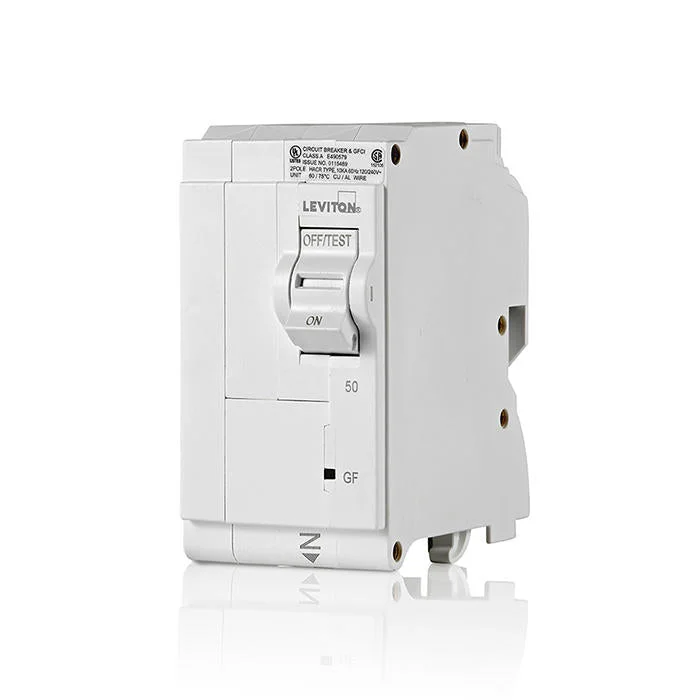
    50A 2-Pole GFCI Hydraulic Magnetic Branch Circuit Breaker, LB250-G manufacturer product photo, Start with the equipment, not a generic outlet guide for the Charleston Lowcountry
    50A 2-Pole GFCI Hydraulic Magnetic Branch Circuit Breaker, LB250-GProduct source: Leviton
    02

    Bonding and grounding are not interchangeable

    Equipotential bonding connects the relevant conductive parts to reduce potential differences in the pool or spa environment. Grounding and fault-current paths serve related but distinct functions. Both need to be assessed within the complete installation. A ground rod does not substitute for the bonding system required for the particular arrangement, and a visible copper wire does not establish that every required component has been connected correctly.

    Changes to pumps, heaters, metal features, surfaces, or surrounding construction can affect the electrical assessment. Coordinate the work with the pool professional and avoid covering connections before required review. Do not use the water or equipment if tingling, unexplained shocks, damaged wiring, or other electrical warning signs occur. Move away from the affected area and arrange qualified help rather than trying another reset or asking someone else to confirm the sensation.

    Manufacturer product photographs illustrate the equipment discussed, not completed EmergenServe installations. Models are examples; availability, specifications, and compatibility must be confirmed. Source attribution does not imply a manufacturer partnership.

    Lowcountry conditions that affect the work

    Humidity, outdoor moisture, retained finishes, and concealed wiring can all affect the scope of an electrical project in the Lowcountry. Coastal exposure calls for equipment suited to the actual mounting location, not a generic claim that every enclosure is weatherproof. In older buildings, assess the conductors and prior alterations rather than judging by faceplates. Newer construction still needs a load calculation when substantial equipment is added.

    For this project, assess manufacturer instructions, bonding, ground-fault protection, and the relationship between equipment and surrounding surfaces at the actual address. Confirm the parcel’s jurisdiction before scheduling work that requires a permit. Inspection or utility scheduling can affect completion; ask about the sequence rather than treating an estimated date as a guaranteed reconnection time.

    Prepare for a useful estimate

    • Provide the exact spa, heater, pump, and control model information.
    • Identify existing disconnects without opening them.
    • Coordinate electrical work with the pool or spa contractor.

    Pricing depends on the agreed equipment, routing, access, existing conditions, and any required permits or utility work. Existing starting prices elsewhere on this page are not a quote for every configuration. Compare written scopes and confirm finish repairs, supplied materials, testing, and exclusions. No new price or manufacturer warranty is implied by the product examples in this guide.