Cut your facility's energy bill by up to 60% with a professional LED retrofit from EmergenServe. We design, install, and maintain lighting systems for warehouses, offices, retail spaces, and parking lots across the Charleston area.
Outdated T12 fluorescent fixtures and metal halide high-bays waste electricity and create maintenance nightmares with constant re-lamping, flickering tubes, and dim spots that affect productivity and safety. EmergenServe replaces aging commercial lighting with modern LED solutions that deliver brighter, more uniform illumination while slashing your electric bill.
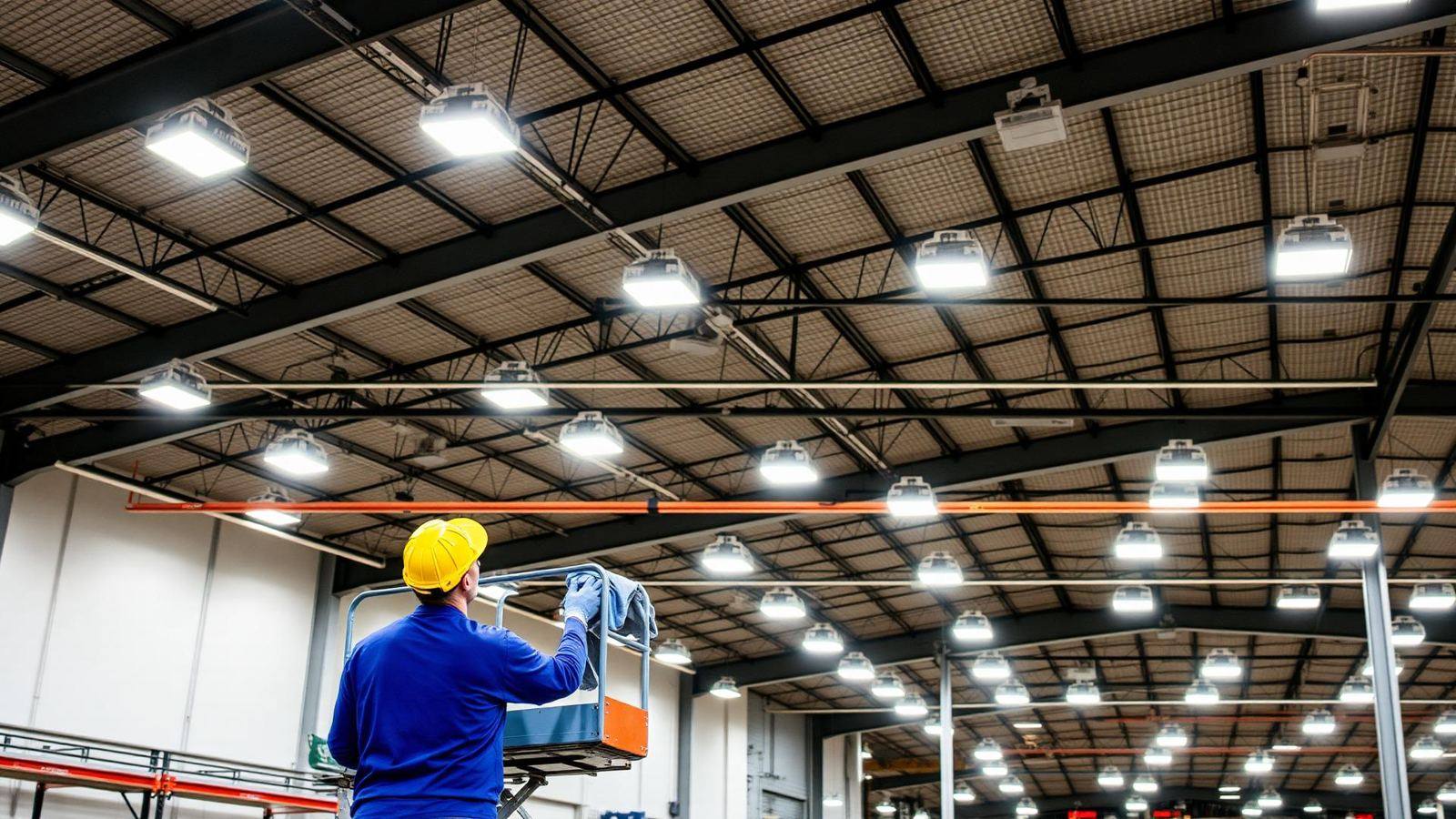
We've retrofitted warehouses in North Charleston that dropped from 400-watt metal halides to 150-watt LED high-bays with the same light output and less than half the power draw. For office tenants on King Street and in the I-526 corridor, we install dimmable LED troffers with daylight sensors that adjust automatically throughout the day.
Our team handles utility rebate paperwork with Dominion Energy and local incentive programs so you capture every dollar of savings available. From the lighting audit to the final punch list, we manage the entire project with zero disruption to your daily operations.
Commercial LED lighting retrofits in Charleston deliver measurable ROI within months, not years. Our licensed commercial electricians calculate your facility's exact lighting requirements using photometric analysis to ensure proper foot-candle levels for your specific application, whether it's a distribution warehouse in Jedburg, a medical office in Mount Pleasant, or a restaurant on Upper King Street. We install lighting controls including occupancy sensors, photocells, and programmable timers that further reduce energy consumption in spaces that aren't occupied around the clock. For parking lot and exterior security lighting, we use pole-mounted LED fixtures rated for Charleston's coastal salt air and hurricane-force winds, providing brighter illumination with dramatically lower maintenance. EmergenServe also specializes in emergency and exit lighting upgrades that meet NFPA 101 Life Safety Code requirements, including battery backup testing and documentation for your annual fire marshal inspection. When you need a commercial lighting electrician in Charleston, our team delivers professional installation, energy savings, and code compliance on every project.
Commercial lighting decisions affect energy bills, employee productivity, customer experience, and code compliance every single day. EmergenServe designs, retrofits, and services commercial lighting across Charleston, Mount Pleasant, Summerville, and the Lowcountry, helping businesses cut energy costs by 50-70% with LED retrofits while improving the look and feel of their spaces.
LED Retrofits That Pay for Themselves
Older Charleston commercial buildings still running T8 or T12 fluorescent troffers, metal halide high-bay fixtures, or incandescent down-lights are leaving thousands of dollars on the table every year. A modern LED retrofit typically cuts lighting energy use by 60-70%, eliminates ballast and lamp replacement labor, and qualifies for Dominion Energy SC commercial rebates that further accelerate payback.
We perform a free walk-through audit, document existing fixture counts and wattages, model the energy savings, and present a payback analysis that includes utility rebates and tax incentives. Most projects pay back in under 24 months.
Office, Retail, Warehouse, and Hospitality Lighting
Different commercial environments call for different lighting strategies. Office spaces need glare-free, color-accurate light at appropriate foot-candle levels. Retail wants accent lighting that makes merchandise pop. Warehouses need high-bay or low-bay LED with motion sensors and daylight harvesting. Hospitality wants warm, dimmable scene-controlled lighting that creates atmosphere.
LED troffer and panel retrofits for offices
Track and accent lighting for retail and galleries
High-bay LED with occupancy sensors for warehouses
Restaurant and hospitality scene control (Lutron, Crestron)
Parking lot and exterior LED with photocell control
Emergency and exit lighting code compliance
Lighting controls and daylight harvesting
Code, Egress, and Emergency Lighting
Every commercial space in Charleston is required to maintain code-compliant emergency egress lighting and illuminated exit signs. We test, repair, and replace emergency battery units and exit signs as part of routine maintenance, and we provide the testing documentation your fire marshal expects during annual inspections.
We also handle the increasingly important parking lot and security lighting upgrades that improve customer safety after dark, with photocell and time-clock controls that ensure lights are on when needed and off when they are not.
Frequently Asked Questions
Will Dominion Energy rebates apply to our retrofit?
Most commercial LED retrofits in the Charleston area qualify for Dominion Energy SC rebates that significantly reduce project cost. We handle the rebate paperwork as part of every project.
Can you work after hours so we don't shut down?
Yes. Restaurants, retail, and offices routinely schedule us for evening and overnight retrofits so customer-facing operations are never interrupted.
Do you maintain emergency lighting and exit signs?
Yes. We offer testing, battery replacement, and full emergency lighting maintenance contracts that satisfy Charleston-area fire marshal documentation requirements.
Service Areas & Specialties
commercial LED retrofit Charleston · LED lighting Charleston commercial · office lighting upgrade Charleston SC · warehouse high-bay lighting Lowcountry · retail lighting Mount Pleasant · Dominion Energy lighting rebate · emergency exit sign maintenance Charleston · Lutron commercial lighting Charleston · parking lot lighting Charleston · restaurant lighting design Charleston
Commercial lighting is a financial decision before it is an electrical one. A Charleston retail or warehouse LED retrofit typically cuts lighting energy by 50 to 70 percent and cuts maintenance labor further, and Dominion Energy business incentives can cover a meaningful share of the project. This section covers how we scope a retrofit, what drives cost, and how we sequence work so your business never goes dark during hours.
What Drives The Price
Fixture count and mounting height
High bay warehouse work needs lifts and two person crews. Troffer swaps in a drop ceiling are fast.
Retrofit kit versus full fixture
Kits are cheaper up front. Full fixture replacement carries better warranty and photometrics.
Controls scope
Occupancy sensing, daylight harvesting, and networked controls add cost and usually add the most savings.
Existing wiring and ballast removal
Ballast bypass work and old fixture disposal are real line items.
After hours scheduling
Night and weekend work costs more in labor and saves more in lost revenue.
Our Service Process
01
Site audit and light level readings
We measure existing foot candles and inventory every fixture rather than estimating from a floor plan.
02
Energy and payback model
You get projected kWh savings, incentive eligibility, and a simple payback period before you commit.
03
Photometric layout
We design to the light levels your space actually needs, which often means fewer fixtures than you have now.
04
Phased installation
Work sequenced by zone, after hours where needed, so the space stays operational.
05
Commissioning and rebate filing
Controls programmed, levels verified, and we prepare the utility incentive documentation.
Retail, Restaurant, And Warehouse Have Different Answers
King Street and Upper King retail needs high CRI accent lighting on merchandise and a warm ambient layer, and the wrong color temperature visibly hurts sales. Restaurants need dimming that holds smoothly to very low levels without flicker, which means specifying the driver as carefully as the fixture. North Charleston and Ladson warehouse and distribution space needs high bay uniformity, occupancy sensing in aisles, and fixtures rated for the ambient temperature under an uninsulated metal roof in July.
Parking lots and exterior areas need photometrics that meet insurance and municipal requirements without light trespass onto neighboring property, which matters in mixed use corridors across the peninsula.
Licensed & Insured in SC
Live Answer 24/7
5 Star Rated Locally
Permits & Inspections Handled
I first called a company that was clearly AI, that was not the case with Emergenserve. I called and talked to an actual person. He answered at 9:00pm and was at my house the next morning at 8:30am. Extremely professional, fair prices, and gets the job done! 5 star work all day long!!!! Can’t recommend enough.
Zachary Strack · Google review
More Questions About commercial lighting retrofit
What does a commercial LED retrofit cost in Charleston?
Troffer retrofits commonly run $90 to $220 per fixture installed. High bay replacements run $250 to $600 per fixture including lift work. Parking lot pole fixtures run higher. Most projects show a payback between eighteen months and four years before incentives. Call (843) 754-1671 for a site audit.
Are utility rebates available?
Dominion Energy offers commercial lighting incentives for qualifying equipment, and Berkeley Electric Cooperative has business programs as well. We identify eligibility during the audit and prepare the documentation as part of the project.
Can you work after hours so we stay open?
Yes. Most of our retail and restaurant retrofits run overnight or during closed hours, zone by zone, so there is no customer facing disruption.
Should I use retrofit kits or replace whole fixtures?
Kits make sense when the housings are in good condition and the layout already works. Full replacement makes sense when housings are corroded, the layout is wrong, or you want the full manufacturer warranty and better optics.
SC Commercial Contractor License #M118613. Active general liability and workers' comp coverage. COI sent to your GC, HOA, or closing attorney the same day you ask.
5.0-Star Google Rated
Google Screened and BBB Accredited with 33 real Google reviews from Charleston, Mount Pleasant, Summerville, and across the Lowcountry.
Upfront Flat-Rate Pricing
Every job is priced before we lift a tool. No clock running, no surprise add-ons, no guessing what the bill will look like when we're done.
100% Satisfaction Guarantee
If something isn't right, we come back and fix it. Workmanship stands behind every breaker, outlet, fixture, and panel we install.
What Commercial LED Lighting Retrofit Actually Covers
LED retrofits swap dated T8, T5, HID, and PL lamps for LED tubes, panels, high bays, and controls that cut lighting energy 40 to 70 percent.
We handle troffer retrofits, warehouse high bays, parking-lot poles, canopy lights, and controls programming for restaurants, offices, retail, and industrial sites.
Signs You Need It Now
Ballast failures happening more often than lamp failures
Utility bill dominated by lighting kWh
Old parking-lot poles with yellow HID heads
Tenant lease requires LED conversion at renewal
Our Process
01Photometric audit and payback calculation
02Dominion Energy rebate paperwork prepared on your behalf
03Off-hours install by lift or scissor to protect operations
04Occupancy, daylight, and dimming controls programmed and commissioned
05Warranty and disposal documentation for lamps and ballasts
Project Considerations for the Lowcountry
·Kelvin selection matters, we mock-up before we order full quantity
·Emergency egress and exit fixtures are code-critical, we upgrade both
·Dominion rebates require prescriptive or custom applications, we file both
Commercial LED Lighting Retrofit FAQs
What is the typical payback?
Most Lowcountry retrofits pay back in 18 to 36 months with rebates factored in.
Do you handle old lamp disposal?
Yes, spent lamps and ballasts are recycled through a certified processor with documentation.
Upgrading your facility with a professional commercial lighting retrofit in Charleston, SC, is more than an aesthetic improvement. It is a strategic move to slash overhead costs and improve operational safety. In the humid and high demand environment of the Lowcountry, outdated HID and fluorescent systems are not just inefficient. They are a liability. From the sprawling distribution centers in North Charleston to the boutique retail spaces downtown, our team provides turn key LED solutions designed to maximize lumen output while minimizing kilowatt hour consumption. We specialize in managing the complexities of local utility rebates and technical specifications for warehouse high bays. Our experts also handle the stringent life safety requirements of South Carolina building codes.
Comprehensive Commercial LED Retrofit Solutions in Charleston
A successful commercial lighting retrofit in Charleston SC requires a deep understanding of the local industrial landscape. Whether you are operating a manufacturing facility near the Port of Charleston or a logistics hub in North Charleston, the transition to LED technology offers an immediate reduction in energy consumption, often by 60% or more. Our process begins with a comprehensive site audit, where we identify existing fixture types, mounting heights, and current light levels. We don't just swap bulbs; we re engineer your lighting environment to better suit your specific operational needs.
We focus on the unique challenges faced by Charleston businesses, such as high heat and humidity levels that can degrade inferior electronic components. By utilizing high quality LED drivers and IP rated fixtures, we ensure that your investment withstands the Lowcountry climate. Furthermore, our team handles the technical heavy lifting of utility rebate procurement, ensuring you receive every possible dollar from local programs like the Dominion Energy Non Residential Small Business Program or Berkeley Electric's commercial incentives.
Detailed lighting audits to establish a baseline of current energy spend.
Photometric layouts to ensure uniform foot candle coverage.
Management of Dominion Energy and Berkeley Electric Cooperative rebate paperwork.
Integration of 0 10V dimming and daylight harvesting sensors.
Compliance testing for NFPA 101 emergency egress and exit lighting.
Industrial and Warehouse Lighting in North Charleston and Palmetto Commerce Park
The massive distribution centers found throughout Palmetto Commerce Park and North Charleston require specialized warehouse lighting Charleston solutions. High bay and low bay layouts must be meticulously planned to ensure safety and productivity. We focus on achieving specific foot candle targets: typically 30 40 foot candles for active picking areas and 10 20 foot candles for bulk storage zones. By utilizing advanced photometric software, we can predict exactly how light will interact with your racking systems before a single fixture is installed.
One of the most significant upgrades for industrial spaces is the move away from 'always on' lighting. Through the use of occupancy sensors and daylight harvesting, North Charleston warehouses can see dramatic savings. Daylight harvesting utilizes sensors to detect natural light coming through skylights or loading dock doors, automatically dimming the LEDs to maintain a constant light level. This not only saves energy but also extends the lifespan of the LED components by reducing their workload during daylight hours.
Replacing 400W Metal Halide fixtures with 150W 200W high efficiency LEDs.
Adjusting beam angles to eliminate 'hot spots' and shadows between racks.
Installation of high mount occupancy sensors for zones with low foot traffic.
Implementing 0 10V dimming to allow for flexible light levels.
Technical Decisions: Ballast Bypass vs. Full Fixture Replacement
A critical decision in any LED retrofit Charleston project is whether to perform a ballast bypass or a full fixture replacement. Ballast bypass, or 'Type B' LED conversion, involves removing the existing fluorescent or HID ballast and wiring the line voltage directly to the lamp holders. This eliminates the ballast, a common point of failure, and is often the most cost effective path for office environments and small retail shops. However, it requires a certified electrician to ensure the wiring is safe and meets local Charleston building codes.
For many North Charleston industrial clients, a full fixture replacement is the superior choice. This allows for the installation of fixtures designed specifically for the thermal and optical properties of LEDs. New fixtures often include integrated cooling fins and precision optics that simply cannot be matched by 'drop in' lamps. While the upfront cost is higher, the long term reliability and the ability to integrate sophisticated 0 10V dimming controls often lead to a better total cost of ownership over the life of the system.
Type B (Ballast Bypass): Direct line voltage to the sockets for maximum efficiency.
Type C (External Driver): Offers the highest level of control and dimming capability.
New Fixture Install: Best for maximizing light distribution and integrated smart controls.
Retrofit Kits: Preserves the aesthetic of architectural housings while upgrading the internals.
Parking Lot Lighting and Security in the Lowcountry
Parking lot lighting Charleston SC is a specialized field that demands attention to both safety and environmental durability. The coastal air in the Lowcountry is notoriously corrosive, meaning that parking lot poles and fixtures must be regularly inspected and treated. Our retrofit services include upgrading high pressure sodium or metal halide site lights to high performance LED area lights. These upgrades provide crisp, white light that significantly improves visibility for both pedestrians and security cameras, reducing liability and enhancing the safety of your patrons and employees.
We also specialize in the maintenance and repair of photocells and time clocks. A common issue in Charleston is 'day burning,' where parking lot lights stay on during the day due to a faulty sensor, wasting thousands of dollars in electricity. During a retrofit, we often move toward integrated photocells on each individual fixture or smart wireless controls that allow property managers to monitor and schedule their lot lighting from a smartphone, ensuring the system is only active when needed.
Site wide photocell testing to ensure lights only operate during dark hours.
Pole base inspections for structural integrity and corrosion in salt air environments.
Upgrading to LED area lights with 'Dark Sky' compliant optics.
Improving vertical lux levels for enhanced security camera performance.
Retail and Restaurant Lighting: Color Temperature and CRI Choices
For Charleston's vibrant retail and restaurant scene, the quality of light is just as important as the quantity. We work closely with business owners to select the correct Color Temperature (CCT) and Color Rendering Index (CRI). In a high end King Street boutique or a West Ashley restaurant, a 'warm' color temperature (around 3000K) is often preferred to create an inviting atmosphere. Conversely, high CRI LEDs (90+) are essential for retail displays to ensure that clothing, jewelry, or food items appear vibrant and true to life.
Standard 'cool' white lighting (5000K) often found in offices can make a dining room feel sterile and uninviting. Our retrofit experts help you navigate these choices, ensuring that your new LED system enhances your brand's aesthetic. We also offer specialized solutions like LED track lighting and gimbal downlights that allow for flexible highlighting of focal points within your space, all while maintaining the energy efficient benefits of a modern LED system.
Selection of 3000K or 3500K 'warm' temperatures for hospitality environments.
High Color Rendering Index (CRI 90+) for accurate product representation.
Installation of sleek LED panels and architectural downlights.
Dimmable solutions to create 'mood' lighting for evening service.
Emergency Egress and NFPA 101 Compliance Testing
Every commercial lighting retrofit in Charleston SC must address the critical requirements of NFPA 101, the Life Safety Code. This code dictates the performance and testing of exit signs and emergency egress lighting. During a retrofit, we evaluate your current emergency system to ensure that, in the event of a power failure, your facility is bathed in at least an average of 1 foot candle of light along the path of egress. Modern LED emergency units are significantly more reliable than older incandescent models and feature self diagnostic capabilities to simplify your monthly maintenance routine.
We provide comprehensive testing and documentation services to ensure your business stays compliant with local fire marshal inspections. This includes verifying that battery backups can sustain light for the required 90 minutes and that all exit signs are clearly visible and properly powered. By integrating these safety checks into your LED retrofit, you protect your employees and customers while avoiding the costly fines associated with life safety violations.
NFPA 101 compliance for emergency exit and egress path lighting.
90 minute battery backup testing for all emergency units.,
Navigating Utility Rebates: Dominion Energy and Berkeley Electric
One of the most valuable aspects of our service is our expertise in local utility rebate programs. For businesses in the Dominion Energy service area, substantial rebates are available for upgrading to DLC qualified LED fixtures. These rebates are often calculated based on the total wattage reduced, making high wattage HID to LED conversions in North Charleston warehouses particularly lucrative. We handle the entire paperwork process, from the initial pre approval application to the final verification, ensuring that the rebate check reaches your desk as quickly as possible.
Berkeley Electric Cooperative offers incentives for commercial members to reduce peak demand with energy efficient lighting. Securing these programs requires technical precision because specific fixture certifications like DLC Premium are often required for the highest rebate tiers. Our team stays current on the shifting requirements of these local utilities. We ensure that your Charleston lighting retrofit is a technical success and a financial win.
Maximizing the Dominion Energy Non Residential Small Business Program.
Securing Berkeley Electric Cooperative commercial lighting rebates.
Federal Section 179D tax deductions for energy efficient commercial buildings.
Calculating 'Simple Payback' and internal rate of return (IRR) for your project.
Budgeting Factors and Pricing Drivers for Charleston Projects
Establishing a budget for a commercial lighting retrofit requires looking beyond the initial purchase price of the lamps. The primary cost drivers in Charleston include the height of the ceilings and the accessibility of the existing fixtures. A warehouse in North Charleston with thirty foot eaves requires specialized lift rentals and increased labor time per fixture compared to a standard retail drop ceiling. If the existing wiring is degraded or lacks a ground wire, additional remediation costs will apply to ensure the new LED drivers function safely and meet current electrical codes.
Labor rates also fluctuate based on the complexity of the control systems being installed. Simple ballast bypasses are the most cost effective upfront, but integrating advanced 0 to 10 volt dimming or wireless mesh networks adds to the initial investment. You must also account for the disposal fees of old fluorescent tubes and ballasts, which contain mercury and polychlorinated biphenyls and require certified hazardous waste handling. We provide a transparent breakdown that separates material costs, labor hours, equipment rentals, and environmental disposal fees.
Investment recovery is the ultimate metric for these projects. While high quality fixtures from manufacturers like Cree or Lithonia carry a higher price point, their superior lumen maintenance and driver reliability prevent premature failures that erase your energy savings. We analyze your current kilowatt hour rate from Dominion Energy or Berkeley Electric to provide an accurate pro forma showing exactly when the system pays for itself. A cheap install often leads to flickering and driver failure within two years, forcing you to pay for labor twice.
Logistics and Phasing to Minimize Business Disruption
Execution of a retrofit project must account for the operational flow of your business to prevent lost revenue. For retail environments along King Street or in Mount Pleasant, this often means performing the work in the overnight hours after the store has closed. Our teams arrive with localized containment to prevent dust or debris from settling on your inventory. We work in zones, completing one section of the building entirely including cleanup and testing before moving to the next area to ensure you are ready for opening the following morning.
Industrial facilities and logistics centers in Palmetto Commerce Park present a different set of challenges. We coordinate with your floor managers to work around production schedules and shipping deadlines. Often, we utilize a rolling schedule where we tackle one bay at a time, allowing forklift traffic to continue in adjacent aisles. This phased approach ensures that your facility never goes dark and that safety protocols are strictly maintained while technicians work in man lifts.
Proper staging of materials is another critical logistical component. We manage the delivery and storage of thousands of lamps and drivers so they do not clutter your loading docks or aisles. Our teams handle the unpacking and debris removal daily, leaving your facility clean at the end of every shift. By maintaining a tight schedule and clear communication, we complete even large scale conversions with zero downtime for your staff or customers.
Code Compliance and Permitting in the Lowcountry
Professional electrical upgrades require strict adherence to local building codes in Charleston, North Charleston, and Summerville. Simple bulb swaps do not trigger permits but comprehensive retrofits involving ballast bypasses or new fixture installs usually require electrical permits from the local municipality. These permits ensure that officials inspect the work for proper grounding, wire sizing, and secure mounting. We manage the entire permitting process by filing the initial applications and attending final inspections with city or county officials.
Compliance with the South Carolina Energy Conservation Code is also mandatory for new construction and significant renovations. This often dictates the maximum lighting power density allowed for your specific building type. By installing high efficiency LEDs, we easily stay under these caps while providing superior light levels. Furthermore, we ensure that all installations maintain the UL listing of the fixtures. Using unauthorized retrofit kits can void the fire safety rating of a fixture, creating a liability for the property owner that we strictly avoid.
Safety codes extend to how the system operates during an emergency. The International Building Code and NFPA standards require specific illumination levels along the path of egress. During a retrofit, we verify that your emergency battery backups and exit signs are integrated correctly with the new LED system. We provide the necessary documentation to show that your building remains fully compliant with life safety codes after the upgrade is finished. This proactive approach prevents issues during annual fire marshal inspections.
Equipment Selection and Material Specifications
Choosing the right hardware is about more than just finding the highest lumen output. In the humid coastal climate of the Lowcountry, the build quality of the LED driver and the thermal management of the fixture are paramount. We select components with robust heat sinks to prevent the internal electronics from overheating, which is the leading cause of premature LED failure. For outdoor applications or damp warehouse environments, we specify IP65 rated fixtures that are sealed against moisture and salt air corrosion.
Color rendering and light distribution patterns are equally important. For a retail showroom, we might select a high CRI chip that makes colors pop, while a distribution center focuses on a wide beam angle to eliminate shadows between tall racking systems. We avoid generic, unbranded products that lack verifiable testing data. Instead, we source from reputable manufacturers who provide five to ten year warranties and have a proven track record of standing behind their products if a component fails.
We also evaluate the compatibility of the equipment with existing or new control systems. If you plan to implement 0 to 10 volt dimming or occupancy sensors, the drivers must be specifically rated for those inputs. Using mismatched components leads to humming, strobing, and poor dimming performance. By selecting the right materials at the start, we ensure the system operates smoothly and provides the specific light quality required for your unique business environment.
Risks of Improper Installation and Poor Workmanship
A poorly executed retrofit is often worse than keeping your old lighting system. One of the most common issues we see from low bid contractors is improper wiring during a ballast bypass. If the shunted or non shunted sockets are not handled correctly for the specific LED tube being used, it can lead to electrical shorts or even fires. Furthermore, failing to secure loose wiring inside the fixture can lead to interference with the light output or create a hazard for future maintenance workers.
Inadequate thermal management is another hallmark of a bad install. If an LED lamp is placed in an enclosed fixture that cannot dissipate heat, the lifespan of the chip will drop from fifty thousand hours to less than five thousand. This results in a rapid decline in light output and a shift in color temperature, leaving your space looking dim and yellowed. We also see many instances where contractors ignore the foot candle requirements of the space, leaving dark spots that create safety hazards in warehouses or a depressing atmosphere in retail stores.
Finally, the lack of proper debris management and hazardous waste disposal is a major risk. Fluorescent tubes contain mercury vapor, and breaking them during a messy installation releases toxins into your facility. We utilize specialized recycling containers and strict handling protocols to protect your air quality and your liability. Choosing a contractor who cuts corners on these safety and technical details ultimately costs more in repairs, fines, and wasted energy.
Post Installation Maintenance and Service Agreements
While LED systems are marketed as maintenance free, they still require periodic oversight to ensure they are performing at peak efficiency. Dust and grime accumulation on the lenses can reduce light output by as much as twenty percent over time, especially in industrial settings near the port or manufacturing zones. We offer service agreements that include regular cleaning of the fixtures and testing of the control systems to ensure occupancy sensors and photocells are functioning as programmed.
Our maintenance plans also include the mandatory annual testing of emergency egress lighting and exit signs. We provide a documented log of these tests, which is required by many insurance providers and local fire marshals. If a driver does fail or a fixture is damaged by a forklift, our service agreement clients receive priority scheduling for repairs. This ensures that your facility remains safe and well lit without you having to manage the technical details yourself.
Long term performance monitoring is another benefit of a structured service plan. We can track your energy usage post install to confirm that the projected savings are being realized. If there are discrepancies, we investigate the control settings or usage patterns to optimize the system. This comprehensive approach transforms a one time project into a long term partnership focused on reducing your operational costs and maintaining a high quality environment for your employees and guests.
Criteria for Evaluating and Comparing Contractor Bids
When you receive multiple bids for a Charleston lighting project, it is essential to compare more than just the bottom line number. A low bid often indicates that the contractor is using inferior materials or plans to skip the permit and rebate paperwork. Ask for a detailed bill of materials that includes the specific brand and model number of the fixtures. Research these components to ensure they are DLC listed, which is a requirement for most utility rebates and a mark of general quality.
Verify the contractor's experience with large scale commercial work in the Lowcountry. Ask for references from similar facilities, such as other warehouses in North Charleston or retail centers in West Ashley. A qualified contractor should be able to provide a sample ROI calculation and a clear plan for how they will manage the rebate process with Dominion Energy. If a contractor cannot explain how they will handle the disposal of your old hazardous materials, they are likely not following environmental regulations.
Insurance and licensing are non negotiable. Ensure the contractor carries adequate general liability and workers compensation insurance, and that they hold a valid South Carolina mechanical or electrical license. A professional bid should also include a clear scope of work detailing the phasing of the project, the expected timeline, and the specific warranties provided for both labor and materials. By vetting these factors, you ensure that you are hiring a partner who will deliver a safe, efficient, and long lasting lighting system.
Frequently Asked Questions
What is the typical ROI for a commercial LED retrofit in Charleston?
Most Charleston area commercial projects see a return on investment within 12 to 24 months, depending on current utility rates and hours of operation. When Dominion Energy or Berkeley Electric rebates are factored in, the 'simple payback' period can drop significantly.
Should I choose ballast bypass or a full fixture replacement?
Ballast bypass (Type B) involves removing the ballast and wiring line voltage directly to the sockets. It reduces future failure points but requires electrical rewiring. Full fixture replacement (Type C or new fixtures) is often better for North Charleston warehouses needing optimized light distribution and advanced controls.
Are there local rebates available for LED upgrades?
Yes. We handle the entire application process for Dominion Energy and Berkeley Electric Co op. These rebates can often cover 20% to 50% of the total project cost for eligible energy efficient upgrades.
How does an LED retrofit affect my NFPA 101 compliance?
The Life Safety Code (NFPA 101) requires that emergency exit signs and egress path lighting be tested monthly for 30 seconds and annually for 90 minutes. Our retrofit services include installing LED battery backup units that simplify this compliance.
What are the specific requirements for parking lot lighting in Charleston?
Parking lot lighting in the Lowcountry must account for high humidity and salt air. We use IP65 or IP66 rated fixtures with integrated photocells and surge protection to ensure longevity against coastal weather patterns.
What is daylight harvesting and how does it work?
0 10V dimming is a control protocol that allows for smooth dimming of LED drivers. When paired with daylight harvesting sensors, the lights automatically dim when natural Lowcountry sunlight is sufficient, further reducing energy costs.
How do you calculate the total cost of a retrofit project?
Price ranges depend heavily on ceiling height and mounting methods. A standard eight foot office retrofit costs significantly less per point than a thirty foot warehouse high bay install requiring heavy duty scissor lifts. Materials usually account for sixty percent of the budget, while labor and specialized equipment rentals cover the remainder. Total project cost is typically recouped through energy savings within eighteen to twenty four months.
Do I need a building permit for an LED lighting upgrade in South Carolina?
Most commercial retrofits in the Lowcountry do not require a full structural permit if you are replacing existing components or bypassing ballasts within current enclosures. However, if you are adding new circuits or significantly altering the electrical load profile, a permit from the City of Charleston or Berkeley County may be required. A licensed master electrician must oversee the work to ensure the UL listing of the fixture remains valid.
What is the expected lifespan of these new LED systems?
Standard LED drivers have a design life of fifty thousand to one hundred thousand hours. In a typical retail environment operating twelve hours a day, this translates to over ten years of service. Harsh coastal environments or high heat industrial settings in North Charleston may see slightly shorter lifespans, making high quality thermal management components essential.
Can you perform the retrofit without interrupting my business hours?
We prioritize scheduling during second or third shifts to ensure your retail floor or office space remains productive. For 24/7 warehouse operations in areas like Palmetto Commerce Park, we utilize a phased approach, sealing off specific aisles to perform installs without halting logistics or shipping activities.
Commercial Electrical Search Terms
commercial lighting retrofit Charleston SC · LED retrofit Charleston · warehouse lighting Charleston · parking lot lighting Charleston SC · industrial LED lighting North Charleston · Dominion Energy lighting rebates SC · Berkeley Electric commercial rebates · high bay LED installation Charleston · parking lot light repair Charleston · 0 10V dimming controls SC · daylight harvesting Charleston SC · NFPA 101 egress lighting Charleston · retail LED lighting Charleston SC事務所 · office lighting retrofit Charleston · parking garage lighting Charleston SC
Related Commercial Services
Most commercial projects touch more than one trade scope. These are the services Charleston area facility managers pair most often with commercial led lighting, all handled by the same licensed crew on one permit and one schedule.
We deliver commercial lighting retrofits across every commercial corridor in Charleston, Berkeley, and Dorchester County. Pick your location for local permitting details, utility coordination, and recent project examples.
Charleston businesses get high bay, office troffer, and parking lot LED conversions with rebate paperwork handled, permitted through City of Charleston. Need broader scope? Our Charleston electrical contractor team covers residential and commercial work in the same visit.
North Charleston businesses get high bay, office troffer, and parking lot LED conversions with rebate paperwork handled, permitted through City of North Charleston. Need broader scope? Our North Charleston electrical contractor team covers residential and commercial work in the same visit.
Summerville businesses get high bay, office troffer, and parking lot LED conversions with rebate paperwork handled, permitted through Town of Summerville / Dorchester County. Need broader scope? Our Summerville electrical contractor team covers residential and commercial work in the same visit.
Goose Creek businesses get high bay, office troffer, and parking lot LED conversions with rebate paperwork handled, permitted through City of Goose Creek / Berkeley County. Need broader scope? Our Goose Creek electrical contractor team covers residential and commercial work in the same visit.
Hanahan businesses get high bay, office troffer, and parking lot LED conversions with rebate paperwork handled, permitted through City of Hanahan / Berkeley County. Need broader scope? Our Hanahan electrical contractor team covers residential and commercial work in the same visit.
Mount Pleasant businesses get high bay, office troffer, and parking lot LED conversions with rebate paperwork handled, permitted through Town of Mount Pleasant. Need broader scope? Our Mount Pleasant electrical contractor team covers residential and commercial work in the same visit.
Moncks Corner businesses get high bay, office troffer, and parking lot LED conversions with rebate paperwork handled, permitted through Town of Moncks Corner / Berkeley County. Need broader scope? Our Moncks Corner electrical contractor team covers residential and commercial work in the same visit.
James Island businesses get high bay, office troffer, and parking lot LED conversions with rebate paperwork handled, permitted through City of Charleston / Charleston County. Need broader scope? Our James Island electrical contractor team covers residential and commercial work in the same visit.
Johns Island businesses get high bay, office troffer, and parking lot LED conversions with rebate paperwork handled, permitted through Charleston County. Need broader scope? Our Johns Island electrical contractor team covers residential and commercial work in the same visit.
Isle of Palms businesses get high bay, office troffer, and parking lot LED conversions with rebate paperwork handled, permitted through City of Isle of Palms. Need broader scope? Our Isle of Palms electrical contractor team covers residential and commercial work in the same visit.
Daniel Island businesses get high bay, office troffer, and parking lot LED conversions with rebate paperwork handled, permitted through City of Charleston (Daniel Island). Need broader scope? Our Daniel Island electrical contractor team covers residential and commercial work in the same visit.
Ladson businesses get high bay, office troffer, and parking lot LED conversions with rebate paperwork handled, permitted through Berkeley, Charleston, or Dorchester County (by parcel). Need broader scope? Our Ladson electrical contractor team covers residential and commercial work in the same visit.
Kiawah Island businesses get high bay, office troffer, and parking lot LED conversions with rebate paperwork handled, permitted through Town of Kiawah Island. Need broader scope? Our Kiawah Island electrical contractor team covers residential and commercial work in the same visit.
Across Charleston County we handle high bay, office troffer, and parking lot LED conversions with rebate paperwork handled, with permits pulled through Charleston County. Need broader scope? Our Charleston County electrical contractor team covers residential and commercial work in the same visit.
Across Berkeley County we handle high bay, office troffer, and parking lot LED conversions with rebate paperwork handled, with permits pulled through Berkeley County. Need broader scope? Our Berkeley County electrical contractor team covers residential and commercial work in the same visit.
Across Dorchester County we handle high bay, office troffer, and parking lot LED conversions with rebate paperwork handled, with permits pulled through Dorchester County. Need broader scope? Our Dorchester County electrical contractor team covers residential and commercial work in the same visit.
Equipment & planning guide · the Charleston Lowcountry
Commercial electrical systems and project coordination
Use this guide to compare options before booking. For this work, the important starting points are operating loads, business continuity, equipment requirements, and access for safe maintenance. Exact equipment selection follows an assessment of your property, the manufacturer’s instructions, and applicable local requirements.
01
Design around equipment and business operation
Commercial projects need a clear understanding of how the premises operate. Lighting, HVAC, kitchen equipment, machinery, data systems, and tenant loads can have different power and continuity requirements. The electrical design should reflect actual equipment data and intended use rather than a generic assumption about floor area. Existing drawings are useful, but field conditions still need to be checked.
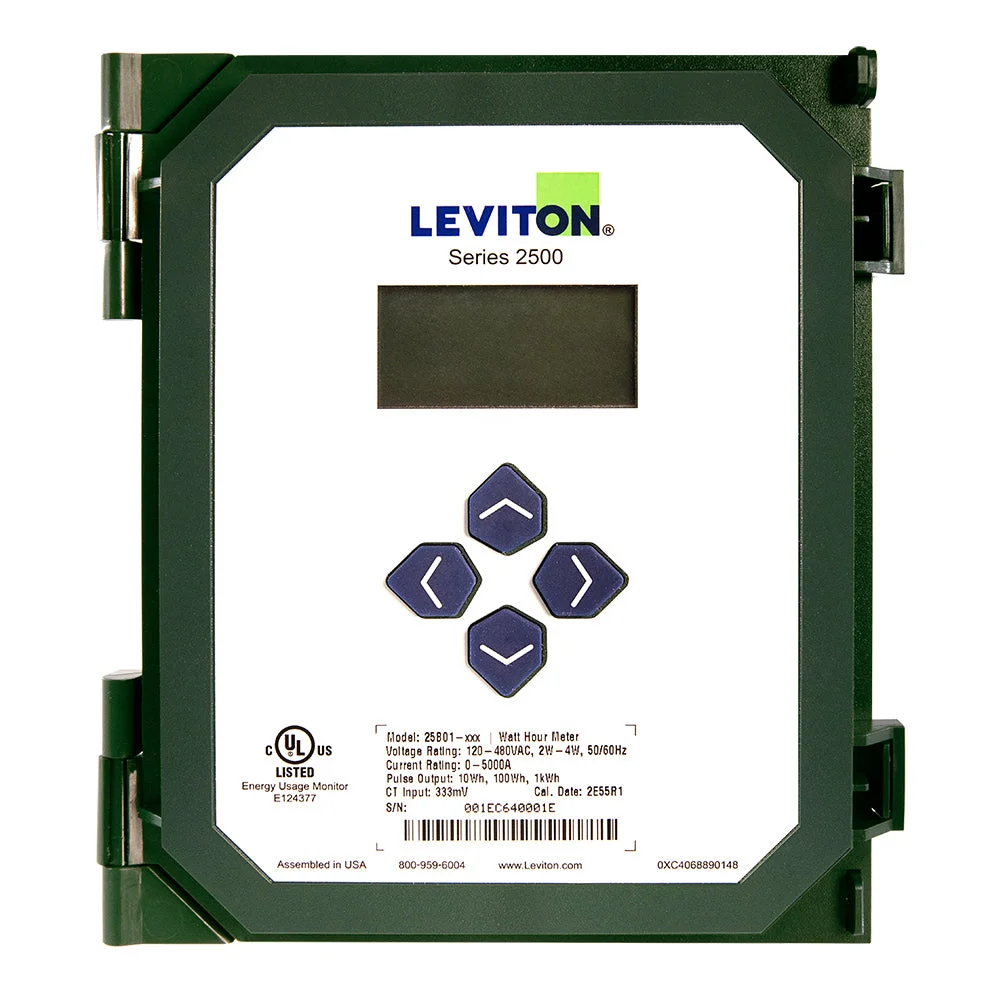
The pictured Leviton VerifEye submeter is a monitoring product example. Metering can help characterize use, while a load calculation, distribution assessment, and equipment review answer different design questions. Ask what information supports the recommendation and whether the scope includes controls, communications, commissioning, or only electrical installation. A good proposal identifies those boundaries so neither the owner nor another trade assumes an essential connection is someone else’s responsibility.
VerifEye Submeter, 120/208V, 120/240V, & 277/480V, Single, Split, and 3-Phase Programmable, Pulse/Modbus, 25B01-000Product source: Leviton
Manufacturer product photographs illustrate the equipment discussed, not completed EmergenServe installations. Models are examples; availability, specifications, and compatibility must be confirmed. Source attribution does not imply a manufacturer partnership.
Lowcountry conditions that affect the work
Humidity, outdoor moisture, retained finishes, and concealed wiring can all affect the scope of an electrical project in the Lowcountry. Coastal exposure calls for equipment suited to the actual mounting location, not a generic claim that every enclosure is weatherproof. In older buildings, assess the conductors and prior alterations rather than judging by faceplates. Newer construction still needs a load calculation when substantial equipment is added.
For this project, assess operating loads, business continuity, equipment requirements, and access for safe maintenance at the actual address. Confirm the parcel’s jurisdiction before scheduling work that requires a permit. Inspection or utility scheduling can affect completion; ask about the sequence rather than treating an estimated date as a guaranteed reconnection time.
Prepare for a useful estimate
Provide equipment schedules and available electrical drawings.
Identify permitted shutdown windows and critical operations.
Confirm tenant, owner, and other-trade responsibilities.
Pricing depends on the agreed equipment, routing, access, existing conditions, and any required permits or utility work. Existing starting prices elsewhere on this page are not a quote for every configuration. Compare written scopes and confirm finish repairs, supplied materials, testing, and exclusions. No new price or manufacturer warranty is implied by the product examples in this guide.