
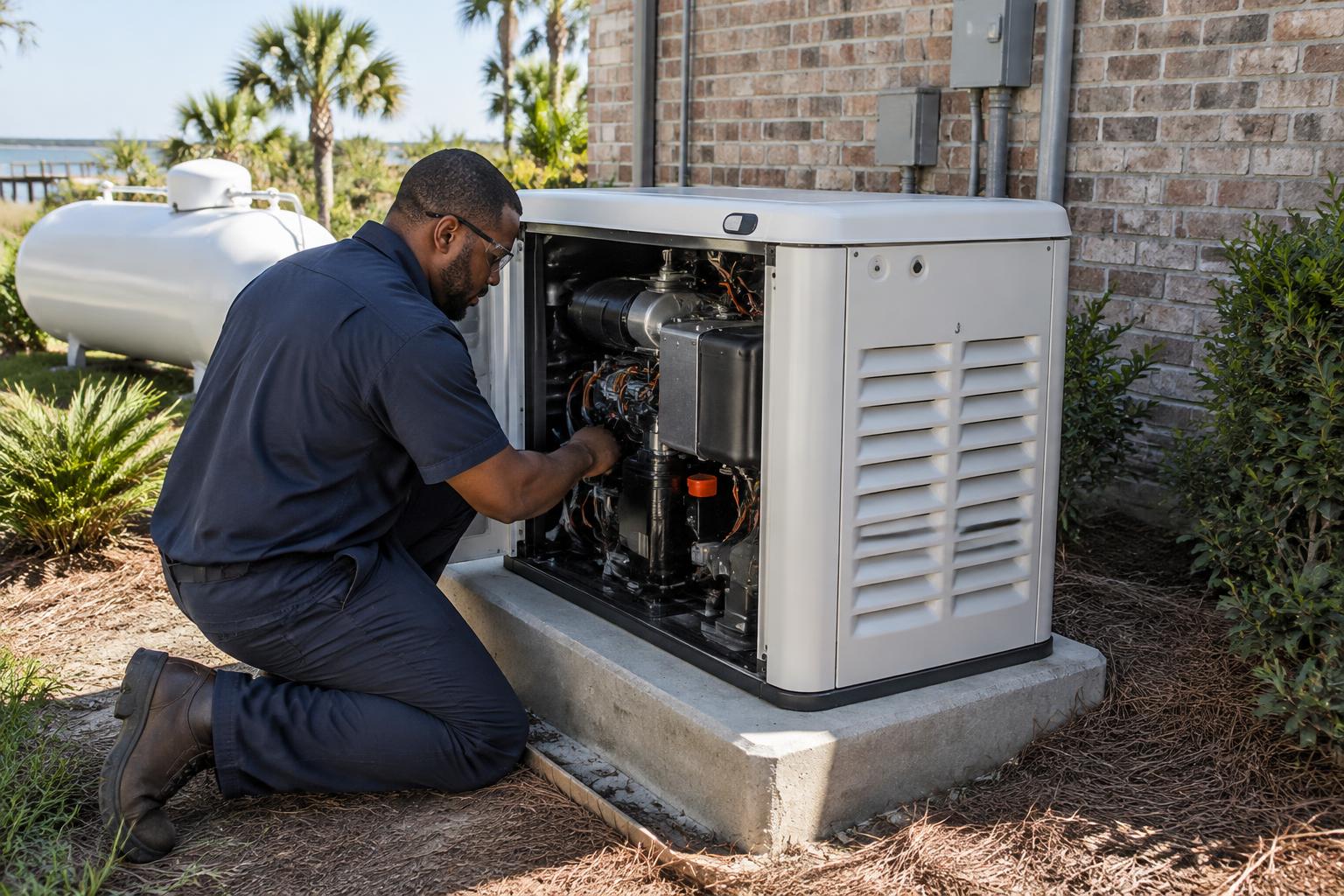
Natural Gas vs Propane Standby Generator: Which Fuel Wins?
Table of Contents
- Natural Gas vs Propane Standby Generator Comparison Chart
- What Is Cheaper to Run: Natural Gas or Propane Generator?
- Propane Generator Tank Size and Runtime
- Standby Generator Fuel Supply During a Power Outage
- Power Output, Efficiency, and Maintenance Differences
- Coastal Installation, Permitting, and Code Requirements
- Which Fuel Fits Your Property? A Decision Framework
- Schedule Your Standby Generator Consultation
- Frequently Asked Questions
Reviewed: November 16, 2026. Runtime and cost figures are planning illustrations, not guarantees. EmergenServe provides the electrical work for standby generators; gas piping, regulators and tanks are handled by a qualified fuel specialist named in the written quote.
Key takeaway: Natural gas is usually cheaper to run and never needs a delivery, while propane is stored on your property and keeps working as long as the tank holds fuel. Match the fuel to the property: a home already on a gas main often suits natural gas, and a home without gas service or with a long outage history often suits propane.
Natural Gas vs Propane Standby Generator Comparison Chart
Choosing between natural gas and propane for a standby generator comes down to three things: what fuel can reach your property, how long you need the generator to run, and what the hookup costs. This guide from EmergenServe walks through the full natural gas vs propane standby generator comparison, with local detail for North Charleston, SC homeowners.
Here is the short version. Natural gas wins on convenience and continuous supply. Propane wins on stored resilience and higher energy content per cubic foot. The table below maps the trade-offs before the deeper sections explain each one.
| Factor | Natural Gas | Propane |
|---|---|---|
| Supply | Continuous pipeline delivery | On-site tank, refilled by a supplier |
| Outage resilience | Can be interrupted in major regional events | Independent of the gas utility while fuel lasts |
| Storage required | None | Tank sized to runtime needs |
| Energy content | Lower BTU per cubic foot | Higher BTU per cubic foot |
| Upfront infrastructure | Gas line, possible meter upgrade, pressure and flow check | Tank purchase or lease, line run, regulator |
| Often a good fit for | Urban and suburban lots already on a gas main | Lots without gas service, long outage histories |
What Is Cheaper to Run: Natural Gas or Propane Generator?
Natural gas is usually cheaper to run per hour than propane, because pipeline gas is generally priced lower per unit of energy than delivered propane. The gap narrows once you factor in meter charges, tank rental, delivery fees and the efficiency differences between fuels. For a North Charleston homeowner, the real answer comes from a repeatable method and current local fuel prices.
Fuel Prices and Operating Cost Math
Operating cost is fuel price multiplied by fuel consumption, and consumption rises with load. A lightly loaded standby generator burns far less than one carrying a whole house. Because prices move, the durable answer is a calculation you can repeat:
- Record your delivered fuel price per unit from your gas bill or propane supplier. Natural gas is billed per therm or per hundred cubic feet; propane is billed per gallon.
- Find the generator's published fuel consumption at 50% and 100% load. Manufacturers list natural gas use in cubic feet per hour and propane use in gallons per hour.
- Multiply consumption by price to get the cost per running hour at each load level.
- Multiply by your expected yearly run hours, including the weekly or monthly exercise cycle, to estimate yearly fuel spend.
Propane owners should also plan for refills. As an illustration, a 500-gallon tank filled to the usual 80% holds about 400 gallons. At an assumed half-load burn of 1.8 gallons per hour, that is roughly 220 hours of runtime. That can carry a multi-day outage, but it is not unlimited, and a tank that runs dry mid-outage is a planning problem, not a fuel problem.
Upfront Installation and Infrastructure Costs
Upfront cost is where the two fuels can differ sharply. A natural gas hookup may need a larger meter from the gas utility, a longer pipe run, and a check that the supply pressure and flow meet the generator's requirements with your other gas appliances running. Propane needs a tank, a line run to the unit, a regulator, and sometimes a concrete pad.
Installed cost depends on generator size, fuel supply, transfer equipment, site preparation, line distance, permit fees and any flood elevation requirements. EmergenServe provides a free written project quote that identifies the equipment, fuel coordination and included work.
Propane Generator Tank Size and Runtime
Propane runtime is usable fuel divided by burn rate. A larger tank does not make the generator more powerful; it only extends how long the unit can run before a refill. Sizing the tank to your realistic outage window matters more than buying the biggest tank available, and in coastal South Carolina that window is set by hurricane season, not by the average summer thunderstorm.
Runtime Calculations for Common Tank Sizes
Run the math before you buy. Take the generator's published consumption at your expected load, then divide the usable tank capacity by that figure. Tanks are filled to about 80% of their water capacity, so plan on roughly 80% of the nameplate size as usable fuel, and confirm the actual usable amount with your propane supplier.
The table below shows how runtime is calculated for common tank sizes. It assumes an illustrative burn rate of 1.8 gallons per hour at half load and 3.5 gallons per hour at full load. Your generator's published figures will differ, so use them for your own numbers.
| Tank size | Usable at 80% | Approx. runtime at half load | Approx. runtime at full load |
|---|---|---|---|
| 120-gallon (vertical) | ~96 gal | ~53 hours | ~27 hours |
| 250-gallon | ~200 gal | ~111 hours | ~57 hours |
| 500-gallon | ~400 gal | ~222 hours | ~114 hours |
| 1,000-gallon | ~800 gal | ~444 hours | ~228 hours |
Read the table against your own outage history, and size the tank to the longest outage you realistically expect. These figures do not include maintenance stops, which manufacturers may require during extended operation, and no tank size guarantees a fixed number of days.
Coastal storms can block refill trucks for days. In North Charleston, that pushes many homeowners toward a larger tank than the calculator alone suggests, and toward scheduling a fill before storm season starts. If you may evacuate, remember that a generator running while you are away still burns fuel. Plan the tank so the unit can cover the time you are gone plus the restoration window after you return.
Standby Generator Fuel Supply During a Power Outage
Fuel supply reliability separates the two options more than price does. Natural gas arrives through underground pipelines that usually keep flowing during electric outages, but service can still be interrupted. Propane sits on your property, so it works as long as the tank holds fuel and the truck can reach you for a refill.
Natural Gas Service Interruption and Resilience
Natural gas service can be interrupted during major events, such as flooding that damages equipment, a utility shutoff for safety, or a pressure problem on the local system. These interruptions are less common than electric outages, but they do happen, so natural gas is not an unlimited runtime guarantee.
Propane removes the dependence on the gas utility but adds a dependence on refills. Neither fuel is perfectly resilient, which is why the right choice depends on your property, your neighborhood's gas service and your outage history.
Power Output, Efficiency, and Maintenance Differences
Propane carries more energy per cubic foot than natural gas, so many dual-fuel standby models carry a slightly higher kilowatt rating on propane than on natural gas. The size of that gap varies by model, so compare both ratings on the manufacturer's specification sheet, especially if you are sizing a generator close to its limit.
Maintenance is similar for both fuels: oil and filter changes, battery checks, transfer switch testing and an annual service visit. Both are gaseous fuels, so neither has the fuel-storage breakdown problems that gasoline does. A maintenance plan that follows your model's schedule and run hours keeps either unit reliable, and EmergenServe offers standby generator maintenance in North Charleston for homeowners who want it handled.
Coastal Installation, Permitting, and Code Requirements
Coastal installations can face requirements that inland installations may not, such as corrosion protection, anchoring for high winds, and flood elevation rules. Local permitting covers both the electrical connection and the gas work.
Corrosion-resistant enclosures and elevated pads are common practice near the coast. On the electrical side, the National Electrical Code (Article 702 covers optional standby systems) and local amendments govern the transfer equipment, wiring and disconnects, while gas piping follows its own fuel gas code. Watch out: placing a generator below the expected flood level can fail inspection and may affect the manufacturer's warranty.
EmergenServe confirms the permitting authority for your address and coordinates the required electrical permits and inspections. Permits can often be pulled the same day, and inspections are scheduled at least a day later.
Which Fuel Fits Your Property? A Decision Framework
Match the fuel to the property, not to a brand preference. This framework settles most cases quickly:
- On a gas main, moderate outages, urban or suburban lot: natural gas usually offers lower running cost and no refills, once the supply is confirmed to meet the generator's needs.
- No gas service, or a long outage history: propane gives you stored fuel on site, with a tank sized to your longest realistic outage.
- Coastal property with flood exposure: either fuel can work, but put elevated, corrosion-resistant installation first.
- Large home with a high load: size the generator to the loads you want backed up first, then compare fuel costs for that size.
For a deeper look at kW sizing, transfer switches, HOA screening and installed cost, review EmergenServe's home generator buying guide before you commit.
Schedule Your Standby Generator Consultation
Fuel choice is only half the decision. Correct sizing, fuel coordination and code-compliant installation decide whether the system performs when the grid goes down. EmergenServe is a family-owned, licensed electrical contractor (SCLLR Commercial Contractors, license M118613) serving North Charleston and the Lowcountry, and we answer emergency calls 24/7.
Request a free written generator project quote that lists the equipment, the electrical work, the fuel coordination and the permits for your property.
Frequently Asked Questions
Is it better to run a standby generator on propane or natural gas?
Neither fuel wins for every home. Natural gas never needs refilling, which suits homes already connected to a gas main with enough supply for the generator. Propane delivers slightly more energy per cubic foot and works where no gas main exists, but you must size and monitor the tank. For North Charleston homeowners, the deciding factors are usually whether gas service reaches the property and how long outages typically last.
How long will a 100-pound propane tank run a standby generator?
Not long. A 100-pound cylinder holds about 23.6 gallons of propane. At an illustrative half-load burn of 1.8 gallons per hour, that is roughly 13 hours. Small cylinders also may not vaporize propane fast enough for a larger generator, especially in cold weather, so many whole-home standby units call for a larger tank. Use your model's published consumption figures and your supplier's tank guidance for your property.
Can a standby generator run on both natural gas and propane?
Many standby models are field-convertible and can be set up for either fuel, but they typically run on one fuel at a time as installed. Output is often slightly lower on natural gas because it carries less energy per cubic foot than propane. A qualified installer can confirm the rated output for each fuel and the correct fuel setup and transfer switch for your property.
Which fuel is more reliable during a power outage?
Natural gas usually keeps flowing during storms because the lines are underground, but flooding, safety shutoffs or utility problems can interrupt service. Propane is stored on site, so it stays available as long as the tank has fuel and a refill truck can reach you. The more reliable choice for your home depends on your gas service, tank size and outage history.
Does a standby generator produce more power on propane or natural gas?
Propane generally produces a higher rated output because it carries more energy per cubic foot. The difference varies by model, from nearly nothing to a noticeable share of the rating, and it matters most when the generator is sized close to your load. Check the manufacturer's rating for each fuel and have a licensed electrician perform a load calculation before choosing.
The grid does not warn you before it fails. Call EmergenServe at (843) 754-1671 or request a written quote for a standby generator sized to your home and fuel supply.
