
Buyer's Guide · Charleston Lowcountry
Home Generator Buying Guide
A standby generator is a fifteen-year appliance decision made in about fifteen minutes of sales conversation. This guide walks through the six things that actually decide whether a system works when the grid goes down: real load sizing, fuel supply, transfer equipment, pad and clearance placement, permits and HOA approvals, and the maintenance the manufacturer requires. Every number here matches what we use on a walkthrough in Charleston, Berkeley, and Dorchester counties.
What This Guide Covers
- What a Standby Generator Actually Does
- Sizing: From 14 kW Critical Loads to 26 kW Whole-Home
- Fuel Choices: Natural Gas, Propane, and What Your Lot Allows
- Transfer Equipment: ATS, Bypass Isolation, and Critical Loads Panels
- Placement, Setbacks, Pads, and HOA Approvals
- Permits, Inspections, and Utility Coordination
- Cost: What Actually Moves the Installed Price
- Maintenance and Storm-Season Readiness
- Buying Checklist: Ten Questions to Ask Before You Sign
Home generator buying guide in detail
What a Standby Generator Actually Does
A standby generator is a permanently installed appliance, not a portable box you wheel out of the shed. It sits on a pad beside the house, stays connected to your electrical panel through a transfer switch, and waits for utility power to fail. Knowing what happens in those first ten seconds makes the rest of the buying decision much easier to judge.
Automatic transfer in about ten seconds
When utility voltage drops below the transfer switch threshold, the switch signals the generator to crank. The generator runs up to speed and confirms stable voltage and frequency, then the switch opens the utility connection and closes the generator connection. Utility and generator power are never tied together, which is what keeps power from flowing back down the street line and endangering a utility crew working in the storm.
Most residential automatic transfer switches complete that sequence in roughly ten to twenty seconds. The house darkens briefly, then comes back on with the circuits your system was designed to carry. If your freezer, sump pump, medical equipment, or pool pump must never blink, that gap is the number to ask about, not the generator's kilowatt rating.
Weekly exercise cycles keep the system honest
A standby generator tests itself on a schedule, usually once a week for fifteen to twenty minutes, with no building load attached. The exercise warms the oil, charges the starting battery, and surfaces a fault long before a real outage would. Some controllers will skip an exercise when utility power is present and the unit is healthy, so a quiet month does not prove the unit never ran.
Exercise cycles matter for HOA approvals too. A unit that runs at six in the morning beside a bedroom window will draw a complaint even when no storm is coming. Controllers let you set the day and time, and placement and screening plan should account for that routine noise, not just the outage noise.
A portable generator is a different decision
Portable units are cheaper, flexible, and useful for a job site or a short outage. They also demand manual setup in the weather, refueling every six to twelve hours, extension cords across wet driveways, and a fuel supply that disappears from Lowcountry shelves within a day or two of a named storm. Gasoline stored in a garage is a separate hazard from anything electrical.
If a portable unit is your plan, wire it properly. A manual transfer switch or a service interlock kit plus a locked inlet box keeps the portable generator isolated from the utility. Plugging a generator into a wall receptacle to power the house backfeeds the line and can kill a lineman. That arrangement is illegal, dangerous, and voids coverage.
Sizing: From 14 kW Critical Loads to 26 kW Whole-Home
Kilowatts are the output number, but the correct size comes from your actual loads, their starting surge, and the service your panel can carry. Sizing by square footage alone produces units that either stall on the first compressor start or sit oversized, short-cycling and burning fuel for a load they were never asked to supply.
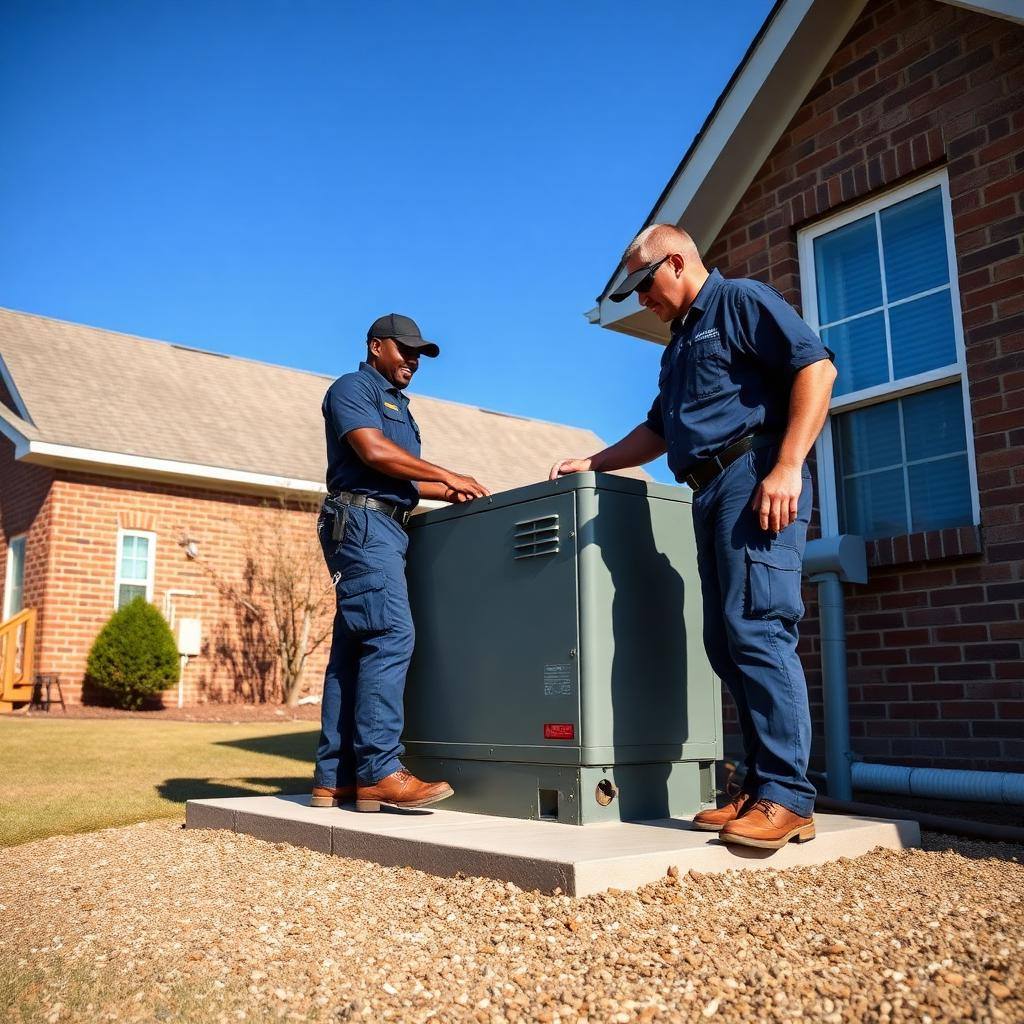
Whole home standby generator installs and transfer switch wiring, storm ready for coastal Charleston outages.
EmergenServe installation photo
Start with a load worksheet, not a house size
Write down what must stay on during an outage, then look up running and starting watts for each. A refrigerator runs around 800 watts and may ask for two to three times that for a second when the compressor kicks in. A well pump, a furnace blower, an aquarium, a home oxygen concentrator, or a sump pump each shift the answer. Lighting, outlets, and a modem add a modest but real floor to the total.
Then decide what you can live without. If central cooling can wait, or can run on one air handler instead of two, the unit shrinks by several kilowatts and the whole project gets cheaper: smaller generator, shorter gas run, smaller transfer switch, and in many cases no service upgrade. A load plan that manages priority is usually smarter than buying capacity to cover the worst possible evening.
Motor starting is what trips an undersized unit
Compressors and pumps draw a large inrush current for a fraction of a second. Air conditioning condensers are the usual culprit in a Lowcountry summer, and a unit sized only for running watts can sag or shut down the moment the condenser attempts to start.
Two fixes exist, and they are not the same purchase. A soft starter fitted to the condenser reduces inrush at the load, which lets a smaller generator carry the same air conditioner. The alternative is a bigger generator that simply absorbs the surge. Compare both quotes against your real cooling schedule, because a soft starter on an inverter compressor you replace in eight years is wasted money.
Typical residential bands: 14 kW, 22 kW, and 26 kW
A 14 kW air-cooled unit generally covers a critical-loads arrangement: refrigerator, lighting, a few receptacle circuits, communications, sump pump, and often one heating or cooling system with help. It is the right call for a household that wants to ride out a two-day outage without running the whole house.
A 22 kW unit is the common whole-home choice for a three-bedroom Lowcountry home on natural gas, carrying central cooling, kitchen appliances, laundry, and electronics together. A 26 kW air-cooled or larger liquid-cooled unit moves into whole-home coverage for bigger homes, multiple A/C systems, a pool pump, an EV charger on reduced output, and a 400-amp service where the transfer equipment has to match.
Panel capacity sets the ceiling
A generator cannot safely supply more than the service it feeds. A 26 kW unit behind a 100-amp service is a mismatch, and a 200-amp home that wants whole-home backup often needs a service-rated automatic transfer switch, a line-side tap, or a service upgrade done in the same mobilization as the generator.
If your panel is a Federal Pacific, Zinsco, or an old fuse box, the transfer equipment has to attach to something that can accept it. Pairing a generator with a panel upgrade is common in Summerville, North Charleston, and the older parts of Mount Pleasant, and doing both at once avoids paying twice for the same outage, the same permits, and the same day of dead power.
Fuel Choices: Natural Gas, Propane, and What Your Lot Allows
Fuel decides runtime, cost, and whether the unit will still be running on day three. Most of our Lowcountry installs run on natural gas, but propane is the honest answer when gas service is not at the property line, and a diesel or bi-fuel arrangement belongs in a commercial conversation.
Natural gas: unlimited runtime with a hard limit
A generator tied to Dominion Energy natural gas runs as long as the gas main is pressurized. That is a genuine advantage after a hurricane, when gasoline and propane deliveries are delayed and roads are blocked. The limit is that gas pressure at the meter can drop during a wide regional outage, and the generator's demand is high. Homes on long service runs or an undersized meter can see the unit fault on low fuel pressure exactly when it is needed most.
Before you buy, the gas line has to be checked for both volume and pressure. Fuel demand is measured in BTU per hour, and Generac's published operating data for its 22 kW liquid-cooled model lists about 316 cubic feet per hour at full load, roughly 316,000 BTU per hour. Pipe diameter, total run length from the meter, and the number of fittings determine whether the existing line supports that, or whether the meter and service line need resizing first.
Propane: predictable runtime you can plan around
Propane tank capacity is a simple math problem. A 500-gallon tank holds roughly 400 gallons of usable propane, which typically covers seven to ten days of normal residential load. A 250-gallon tank roughly halves that. The tank can be leased or owned, must sit clear of openings and property lines, and has to be filled before a storm rather than after it.
Propane is the right answer for homes off the gas main, for households that want a guaranteed runtime they can calculate, and for anyone who has watched fuel logistics fail. The trade-off is visible tank placement, delivery scheduling, and a fuel cost per kilowatt-hour that usually runs higher than natural gas.
Gas work belongs to a licensed fitter
In South Carolina, the electrical side and the fuel side are separately licensed. A standby generator installation needs a licensed electrician for the transfer switch, the feeder, the grounding, and the commissioning, and a licensed gas fitter for the tap, the run, and the pressure test. EmergenServe holds both, so one crew handles the electrical, fuel, and transfer work without a subcontractor arriving a week later to discover a conflict.
Ask for the pressure test result in writing. A gas line that passes a leak test at installation but was never verified for volume under load is the most common reason a new generator shuts down on a high-load call three months later.
Transfer Equipment: ATS, Bypass Isolation, and Critical Loads Panels
The transfer switch is the safety device in the system, and it is where the cheapest quote quietly gets thin. Size it for the service it protects, not just for the generator's output, and decide now whether you want whole-home coverage or a curated list of circuits.
Service-rated automatic transfer switches
A service-rated automatic transfer switch (ATS) carries the full service rating, from 100 amps through 400 amps, and is listed to sit in line with the utility service. Because it is rated for that role, it can be mounted on the load side of the meter without a separate outside breaker in many jurisdictions, and it lets the generator feed the entire panel.
Non-service-rated switches are also legitimate, but they require an overcurrent device ahead of them and are typically applied to selected-load panels. Compare a quote by switch model and amp rating, not by the phrase 'automatic transfer switch,' which covers both approaches at very different prices.
Bypass isolation switches and dual supplies
A bypass isolation transfer switch lets a technician service the switch itself without dropping the building. That matters most where an outage during maintenance is unacceptable, and in commercial work where the switch also has to handle a generator exercised under load. For most homes it is an unnecessary cost; for a facility, a medical practice, or a property with a second standby source, it is the correct specification.
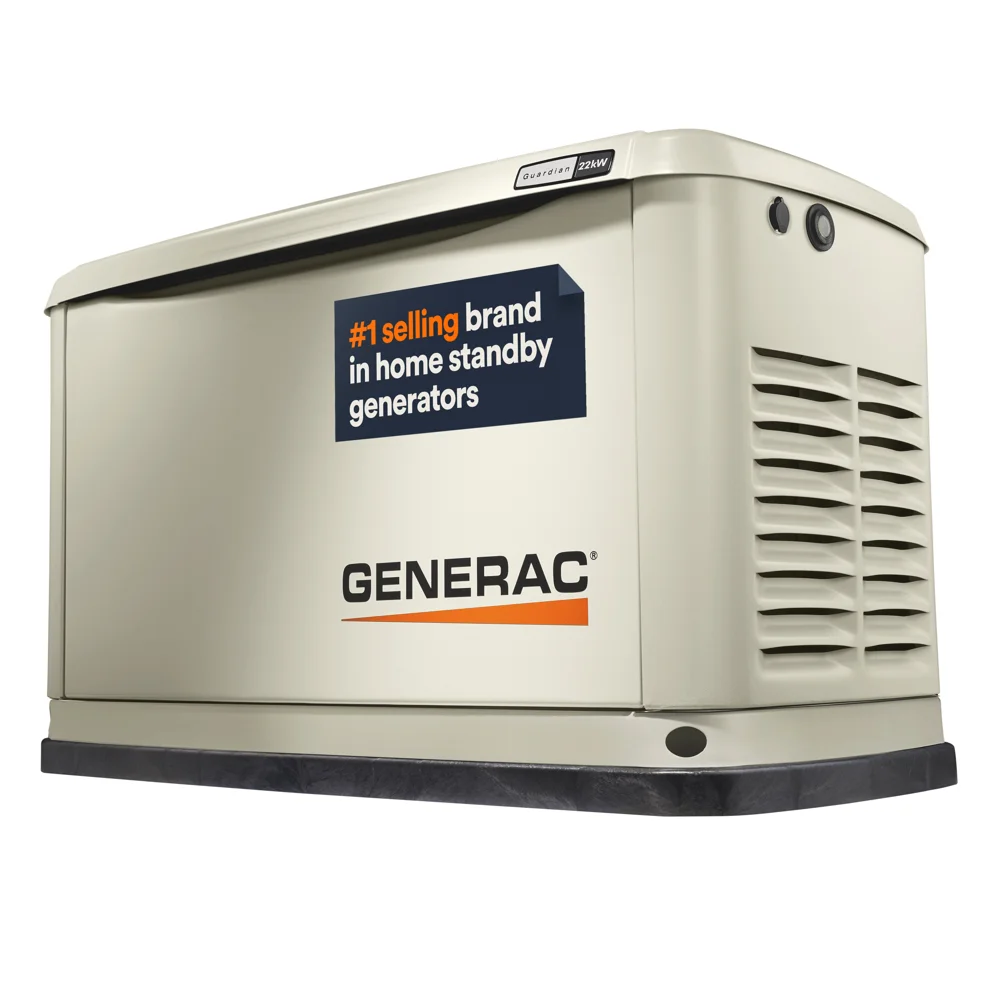
The pictured Generac Guardian is a manufacturer product example, not an EmergenServe installation.
Product source: GeneracCritical loads panels and pairing with a battery
A critical loads panel is a small subpanel holding the handful of circuits you truly need: refrigerator, a lighting branch, the internet, the sump pump, a bedroom receptacle. The generator or a battery system feeds that panel, and everything else stays on the utility. This is the least expensive path to reliable backup power and the cleanest way to add a battery later.
If you are pairing a generator with a solar battery, the transfer arrangement has to be designed around both sources. The battery inverts its own output during an outage, and the generator must never be connected to the same circuits the battery is already energizing. Some systems switch over deliberately, others interlock, and some exclude the generator from battery-backed circuits entirely. Get that plan in writing before the equipment is ordered.
Manual transfer switches and inlet boxes
For a portable generator, a manual transfer switch mounted beside the panel selects which circuits the generator feeds, and a locked inlet box on the exterior wall provides the connection point. A service interlock kit instead lets the whole panel run from the generator, with a mechanical barrier preventing the main breaker and generator feed from closing together.
Inlet boxes and interlocks are cheap insurance compared with extension cords running through a doorway. They also make the difference between an outage you manage and an outage where you are improvising with a wet cord at midnight.
Placement, Setbacks, Pads, and HOA Approvals
Placement is where a generator project stalls. It involves the manufacturer's clearances, local setbacks, flood elevation, the air conditioner condenser, the property line, the bedroom windows, and in many Lowcountry communities an HOA that wants to see the screening before it approves anything.
The pad: concrete, composite, or elevated
Most manufacturers require a reinforced concrete pad, typically four inches thick and sized with several inches of margin beyond the unit's footprint, or a listed composite pedestal. The pad must drain away from the enclosure and must keep the unit above expected standing water. In flood-prone parcels on James Island, Johns Island, and the barrier islands, the pad height and the unit's minimum elevation may need to clear the base flood elevation, which changes both the pad and the conduit routing.
A composite pedestal installs faster and can be raised more easily, which helps on tight or soggy lots. A poured pad lasts essentially forever and reads better to a future buyer. Either way, the pad is poured or set before the generator arrives, and the crane or forklift access has to be planned on the same day.
Clearances, exhaust, and combustion air
Every enclosure carries minimum clearances published by the manufacturer: distance from the exhaust discharge, from openings such as windows and doors, from the garage, from the condenser, and from the property line. Those numbers are not suggestions. Exhaust gases include carbon monoxide, and a unit set too close to a soffit, a bedroom window, or an attic vent is a life-safety problem, not a cosmetic one.
The unit also needs combustion air and service access. A generator boxed in by a new fence, a hot tub, or a shed addition will overheat, lose output, and become impossible to service. If a fence or landscape screen is planned, build the clearance into the drawing before the permit application, not after the inspector finds the enclosure.
Noise ratings and where they are measured
Modern residential standby generators run in the 60 to 67 decibel range during normal operation, quieter than a typical air conditioning condenser. That figure is measured at a stated distance, usually seven feet from the enclosure, and a neighbor's complaint is measured at their window, so the real question is placement plus screening.
Sound attenuation enclosures, a landscaped buffer, or a decorative screen placed outside the required clearances all reduce what a neighbor actually hears. In dense Mount Pleasant, Daniel Island, and Nexton lots, ask for the noise figure and the screening detail together; an approval that ignores the weekly exercise cycle will come back to you.
HOA screening plans and architectural review
Communities with architectural review, including Nexton, West Cottages, many Summerville and Ladson subdivisions, and most of Kiawah and Seabrook, generally want a site plan showing the unit's location, a screening plan, and a setback drawing before they will approve the install. Some also require the enclosure to match the house palette or to sit behind a fence of a specified type.
We prepare and submit that package as part of the permit work, because the HOA drawing and the permit drawing should be the same drawing. Two versions is how a project ends up with a relocated pad and a longer gas run than anyone quoted.
Permits, Inspections, and Utility Coordination
A generator install crosses several authorities: the permitting jurisdiction for electrical and mechanical work, the utility serving the property, and sometimes the county health or flood authority. Getting the sequence right is the difference between a two-week project and a two-month one.
Which jurisdiction permits your parcel
Homes inside incorporated limits permit through their town. Homes with a mailing address but outside those limits permit through the county. In the Summerville area that means the Town of Summerville for town parcels, Dorchester County for much of the rest, and Berkeley County for parts of Cane Bay and Nexton. Charleston County, the City of Charleston, Berkeley County, and Dorchester County each run their own electrical and mechanical processes.
We check the parcel in the county GIS before quoting so the correct permit is filed the first time. A permit filed with the wrong authority is not a small correction; it is a withdrawal, a refund cycle, and a fresh review queue.
Electrical and gas permits, plus final inspection
Every standby generator installation needs an electrical permit and a gas or mechanical permit, and both close with an inspection. The inspector verifies the transfer switch rating and installation, grounding and bonding, the generator's disconnecting means and its labeling, the pad and clearances, and the gas run with its pressure test.
Expect the inspection to look at documentation as well as hardware: manufacturer installation instructions on site, the fuel pressure test, and a unit whose disconnect is outside, readily accessible, and clearly marked as a parallel power production system. Those details cost nothing when they are planned and cost a return visit when they are not.
Utility notification and parallel operation
Dominion Energy, Berkeley Electric Cooperative, and Edisto Electric Cooperative each handle a standby generator on their own terms. Most require notification, and some require a specific form or a field check confirming the transfer equipment prevents backfeed. A meter that has to be resized for the generator's gas or electrical demand is a separate utility request with its own schedule.
Build the utility's timeline into the project plan. On a barrier island or a cooperative-served parcel, the utility step can take longer than the installation itself, and the unit should not be commissioned until that paperwork is closed.
South Carolina licensing
South Carolina requires a licensed electrical contractor for the electrical work and a licensed gas fitter for fuel work, and the state's contractor licensing law (S.C. Code Section 40-27) applies to both. Ask for the license number and verify it before anyone digs. EmergenServe is licensed under SCLLR Commercial Contractors, license number M118613.
Cost: What Actually Moves the Installed Price
Installed generator pricing depends on generator size, fuel supply, transfer equipment, site preparation, and permitting. We provide a free written project-specific quote that identifies equipment, fuel coordination, and included work.
The line items that decide the number
Equipment: the generator, the transfer switch, the pad, and any critical loads panel. Site work: the gas tap and run, the meter or service line change, conduit and feeder from panel to switch, and the excavation. Labor: setting and rigging the unit, terminating conductors, commissioning, and registering the warranty. Soft costs: permits, HOA submittals, and utility coordination.
The variables that swing a quote most are gas line length from the meter, whether a service upgrade is required, pad height in a flood area, and how far the generator sits from the panel. A 25-foot run and a 150-foot run are not the same job, and a 200-amp home that needs 400-amp equipment is a different project than one that does not.
What to compare when quotes look identical
Put both proposals side by side and check five things: exact generator model and kilowatt rating, transfer switch model and amp rating, who pours and elevates the pad, whether the gas pressure and volume calculation is included, and whether permits, HOA submittals, and manufacturer registration are in the price or billed later.
Then check the exclusions. A quote that excludes a service upgrade, a meter relocation, or a longer gas run than the site actually needs is not a cheaper price. It is the same price with the surprise moved to an invoice you will receive after the trench is open.
Financing, warranties, and what a warranty excludes
Manufacturer warranties on residential standby units commonly run three to five years depending on series, and Kohler's residential line is often specified for its five-year residential coverage. Warranty terms depend on a properly documented installation, a registered unit, and a maintenance schedule that follows the manufacturer's intervals rather than a generic one.
Labor warranties belong to the installer and should be in writing. Ask what is covered if the transfer switch fails in year two, whether a service call is charged while the unit is under manufacturer warranty, and who coordinates a parts claim with the manufacturer when you are sitting in the dark.
Maintenance and Storm-Season Readiness
A generator is the one appliance in your house that is expected to perform after sitting idle for weeks. Maintenance intervals exist because heat, fuel, and vibration degrade oil and batteries whether or not the unit ever carried a load.
Follow the manufacturer's schedule, not a rule of thumb
New units generally need a first service after a short break-in period measured in run hours, then oil and filter service on an interval that depends on the model and how heavily the unit runs. Air filters, fuel filters, spark plugs, drive belts, coolant on liquid-cooled units, and the starting battery all follow their own intervals, and the manufacturer's schedule for your exact series governs.
Run hours are the honest trigger. A unit that exercised weekly and then carried a four-day outage has logged far more than a calendar suggests, and its next service should reflect the actual hours rather than the date on the calendar.
What a proper service visit includes
A good visit is not just an oil change. It includes a load-side check of the transfer contacts, a battery load test rather than a voltage glance, coolant and belt inspection, air and fuel filter replacement, a check of the exhaust and shielding, verification that the controller reports no stored faults, and a real transfer test under load where the system actually picks up building power.
Ask for the run hours, the fault log, and the battery test result written down. A service record that shows a clean exercise is weaker evidence than a record showing the unit carried load, transferred, and then transferred back without a stored code.
Preparing for hurricane season
June through November is when the Lowcountry finds out whether the system works. Before the season, confirm the exercise schedule is active, the battery is healthy, the fuel supply is confirmed, and the enclosure is clear of leaves, mulch, and stored items. If the property runs on propane, schedule the fill early; delivery trucks cannot cross a blocked road.
After a storm, run the unit under load rather than trusting the exercise log, then check the fault history. If the unit ran for days, its oil interval moves up immediately, and a unit that flooded or sat under salt water should be inspected and dried before it is started again.
Buying Checklist: Ten Questions to Ask Before You Sign
Bring this list to the walkthrough. A contractor who answers all ten in writing has done the design work; one who answers with a kilowatt number and a price has quoted a guess.
Design and equipment
1. What is my calculated running and starting load, and which circuits are excluded? 2. What exact generator model, kilowatt rating, and fuel BTU demand are you proposing, and what is the gas volume and pressure calculation for my run? 3. What transfer switch model and amp rating, and is it service-rated for my panel?
4. Does my existing service and panel support this, or is a service or panel upgrade required, and is that price included? 5. Where exactly does the unit sit, what are the manufacturer clearances, and how is the exhaust kept away from openings?
Approvals, schedule, and service
6. Who prepares the HOA screening plan and setback drawing, and who pulls the electrical and gas permits? 7. What does the utility require for my parcel, and how long does that take? 8. What is the pad specification and elevation, and does it clear standing water on my lot?
9. What maintenance schedule does the manufacturer require, what does your service plan cost, and what is covered under your labor warranty? 10. Will I get a commissioning test with a documented transfer under load, the run hours, the fault log, and the manufacturer registration confirmation?
Home Generator FAQs
What size generator do I need for a 2,500 square foot Charleston home?
Usually 22 kW for whole-home coverage on natural gas, or 14 kW if you back up a curated list of circuits instead of the whole house. The correct number comes from a load worksheet that includes running and starting watts for your refrigerator, HVAC, well or sump pump, and any medical equipment, then checked against your panel's service rating. Square footage alone will over-size some homes and under-size others.
Will a standby generator run my central air conditioning?
Yes, if the unit is sized for the compressor's starting surge or the condenser is fitted with a soft starter. A 22 kW unit typically carries one central system, while a home with two air handlers, a pool pump, and an EV charger usually needs 26 kW or a load-management plan. Ask the contractor which of the two fixes is in the quote, because the prices are very different.
How long can a standby generator run on propane?
A 500-gallon tank holds about 400 gallons of usable propane and generally covers seven to ten days of normal residential load; a 250-gallon tank roughly halves that. Natural gas units run indefinitely while the gas main stays pressurized, though regional outages can drop meter pressure and fault a unit on an undersized service line.
Do I need a permit and an inspection for a generator?
Yes. Standby generator installs need both an electrical permit and a gas or mechanical permit, and both close with an inspection that checks transfer switch rating, grounding and bonding, the disconnect and its labeling, pad clearances, and the gas pressure test. Which authority issues them depends on whether your parcel sits inside town limits or in the county.
How close can a generator sit to my house?
Close enough to run conduit and gas efficiently, but never inside the manufacturer's minimum clearances for exhaust discharge, windows, doors, the garage, and the property line. Those clearances are a carbon monoxide control, not a preference, and they also have to leave room for service access and combustion air if you plan a fence or screen later.
Can a generator work with my solar battery system?
It can, but the transfer arrangement must be designed around both sources so the generator never backfeeds circuits the battery is already energizing. Many homes use a critical loads panel for the battery and keep the generator on a separate, interlocked arrangement, or deliberately exclude the generator from battery-backed circuits. Get that plan in writing before equipment is ordered.
Put a Number on Your Home
Bring your load worksheet, a photo of your electrical panel and gas meter, and your HOA's architectural guidelines to a free walkthrough. We size the unit, check the gas volume and pressure, confirm the transfer switch rating against your service, and hand you one written price that includes permits and the HOA screening submittal. Explore whole-home generator installation or generator repair if your unit already exists. Plan ongoing generator maintenance or explore local generator repair in Summerville and Mount Pleasant.
Manufacturer & Code References
- Generac: residential standby generators
- Briggs & Stratton: standby generators
- Dominion Energy South Carolina
- NFPA 70 National Electrical Code
- NEMA standards
- South Carolina contractor licensing law, Section 40-27
- ENERGY STAR
Manufacturer pages are shown for product identification only; inclusion does not imply an affiliation or endorsement. Equipment ratings, clearances, warranty terms, and permit requirements must be confirmed for the exact model, the parcel, and the local authority having jurisdiction before purchase.