Design around equipment and business operation
Commercial projects need a clear understanding of how the premises operate. Lighting, HVAC, kitchen equipment, machinery, data systems, and tenant loads can have different power and continuity requirements. The electrical design should reflect actual equipment data and intended use rather than a generic assumption about floor area. Existing drawings are useful, but field conditions still need to be checked.
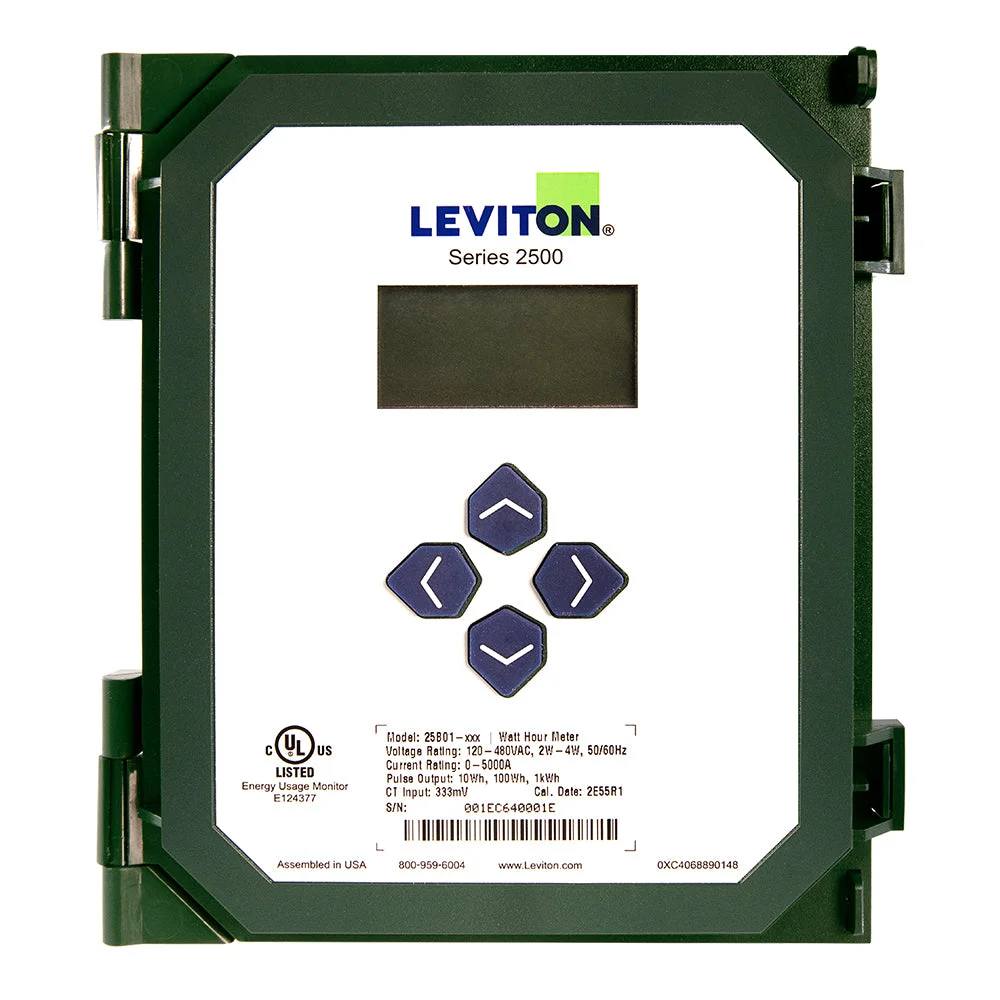
The pictured Leviton VerifEye submeter is a monitoring product example. Metering can help characterize use, while a load calculation, distribution assessment, and equipment review answer different design questions. Ask what information supports the recommendation and whether the scope includes controls, communications, commissioning, or only electrical installation. A good proposal identifies those boundaries so neither the owner nor another trade assumes an essential connection is someone else’s responsibility.